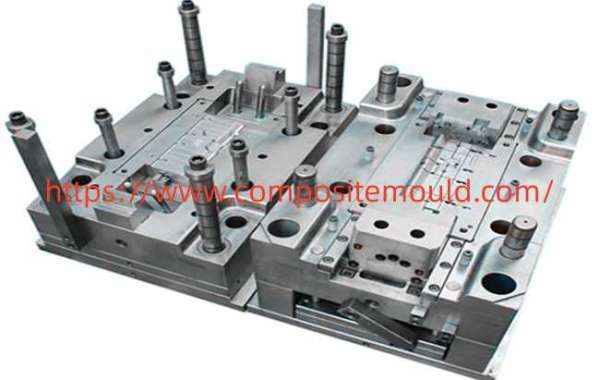
SMC Mould is a forming tool used with sheet molding compound during compression molding. SMC is a sheet-form composite material that commonly contains thermoset resin, reinforcing fibers, fillers, and additives. During production, prepared material is placed into a heated cavity and formed under pressure before curing into the required component shape. This combination of material preparation, controlled forming, heat, and pressure gives manufacturers a structured method for producing composite parts with defined geometry.
What Is SMC In Manufacturing?
SMC stands for Sheet Molding Compound. Unlike liquid resin systems that are poured directly into a cavity, SMC arrives as a prepared sheet that can be cut into charges before compression molding.
The material is generally based on a thermosetting resin system reinforced with fibers. Glass fiber is commonly used, while fillers and other additives can be included according to the intended formulation. The prepared sheet is matured before molding so that its viscosity reaches a condition suitable for handling and processing.
This preparation makes the material suitable for a controlled compression molding workflow.
How Does The Tool Work?
The tooling normally contains matched forming surfaces that define the final geometry. After the material charge is positioned, the heated tool closes and pressure causes the compound to flow into the cavity.
During this stage, several factors interact. Material placement affects flow distance, while temperature influences viscosity and curing behavior. Cavity geometry determines how the compound moves through different sections.
Research into SMC compression molding has examined relationships between mold temperature, geometry, closing speed, material flow, fiber distribution, and curing behavior.
This is why tooling design needs to be considered together with the selected material rather than treated as an isolated component.
Why Does Geometry Matter?
The shape of a finished composite component directly influences tooling design. Large flat sections, ribs, curved surfaces, mounting points, holes, edges, and changes in thickness can all affect how material flows inside the cavity.
A suitable design can help the compound reach the intended areas while reducing unnecessary flow paths. Draft angles and appropriate radii can also support demolding after curing.
For manufacturers developing a new component, reviewing the product geometry before machining begins can help identify areas that may require adjustment.
Surface Quality Depends On Tooling
The forming surface becomes the reference for the visible surface of the molded component. Its finish, geometry, parting arrangement, and maintenance condition can therefore influence the final appearance.
For applications where appearance matters, manufacturers may pay particular attention to cavity polishing, texture, venting, parting lines, and surface treatment.
A tooling project should therefore define the desired surface appearance at an early stage. Physical samples, drawings, and approved reference surfaces can provide useful communication points between the buyer and manufacturer.
SMC Supports Different Industrial Uses
SMC has been used for molded composite components in automotive, electrical, construction, transportation, and equipment applications. Its ability to form relatively large panel-type structures is one reason it remains relevant to composite manufacturing.
The appropriate application depends on the material formulation, component design, production conditions, and required properties.
For manufacturers, the important question is not simply whether SMC can be molded, but whether the material and tooling arrangement fit the specific component.
Tooling Design And Material Flow
Material flow is an important consideration during compression molding. The charge needs to spread through the cavity while the reinforcing fibers and resin system respond to pressure and temperature.
If the initial material placement is unsuitable, some areas may receive more flow than others. Geometry changes can also influence fiber orientation and local material distribution.
This makes charge placement, cavity design, pressure conditions, and temperature part of the same engineering discussion. Modern simulation research also examines process-induced changes in fiber orientation and material distribution because molding conditions can affect the resulting composite structure.
Why Repeatability Matters
When a component moves from prototype production into repeated manufacturing, consistency becomes an important consideration. The forming surfaces need to maintain the intended geometry while production conditions remain controlled.
Tool maintenance, temperature management, material preparation, charge placement, and inspection all contribute to repeatable production.
For manufacturers ordering tooling, it is useful to discuss expected production quantities and maintenance requirements at the beginning. These details can influence material selection for the tooling itself and the overall engineering approach.
Custom Tooling For Different Components
Not every SMC component has the same shape or manufacturing requirement. A small electrical housing may need a different cavity arrangement from a large automotive panel.
Custom tooling can therefore be developed around the actual component drawing. Important information can include dimensions, tolerances, material type, surface requirements, mounting locations, draft angles, parting lines, and production quantity.
Compositemould works with composite tooling and molding requirements, allowing project discussions to begin from the intended component geometry and manufacturing conditions rather than relying on a fixed configuration.
What Should Buyers Discuss Before Production?
Before confirming a tooling project, buyers can prepare several items:
Complete 2D or 3D product drawings
Material type and formulation
Expected production quantity
Surface requirements
Dimensional tolerances
Demolding direction
Insert or mounting requirements
Preferred parting arrangement
Production equipment information
Inspection expectations
Providing these details early gives the engineering team a clearer basis for evaluating the tooling concept.
Why Tooling Matters To Modern Manufacturing
The importance of SMC tooling comes from its connection with the entire molding process. The cavity defines geometry, the forming surfaces influence appearance, and the design affects material flow and demolding.
At the same time, the tool needs to work with the selected SMC formulation and the available compression equipment.
This relationship means that tooling should be developed as part of the manufacturing process rather than treated as a separate purchase.
How Compositemould Supports SMC Projects
Compositemould focuses on composite molding solutions and can work with manufacturers that require customized tooling for SMC components. Project discussions can cover product drawings, cavity geometry, material considerations, surface requirements, production conditions, and other technical details.
For manufacturers developing automotive components, electrical housings, construction products, transportation parts, or other composite applications, careful tooling planning can provide a practical foundation for subsequent production.
The right tooling approach depends on the specific component, material, equipment, and production requirements. Buyers can review the https://www.compositemould.com/ to discuss suitable composite tooling solutions for their next manufacturing project.