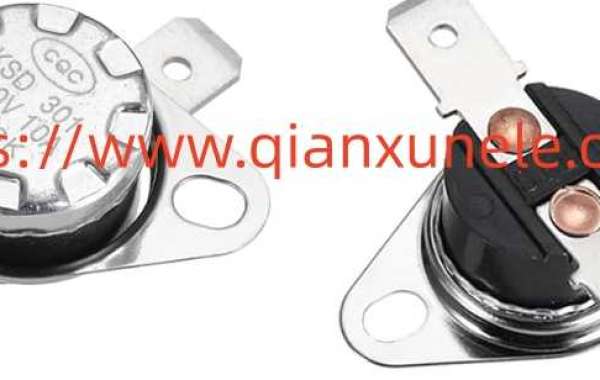
KSD 301 Steam Iron Thermostat is a mechanical temperature control component used in heated household appliances. Its working principle is based on a bimetal disc that responds to changes in heat. As the soleplate becomes warmer, the disc changes position and switches the electrical contacts. When the surface cools, the contact state can return and allow heating to continue. This repeated process creates a practical cycle between heating and cooling during normal appliance operation. Qianxunele provides related components for manufacturers developing household heating appliances.
How Does the Bimetal Structure Work?
The central element is a bimetal disc made from two metals with different thermal expansion characteristics. When the surrounding temperature changes, the two materials expand at different rates.
This difference creates movement within the disc. At a designed activation point, the disc changes position rapidly and operates the internal contacts.
The mechanism does not require a complicated electronic control system to perform its basic switching function. The physical movement of the disc responds directly to heat around the sensing area.
Technical references describe this type of KSD301 structure as a snap action bimetal mechanism that changes the circuit state when the sensing temperature reaches the specified point.
How Does the Heating Cycle Continue?
A household pressing appliance does not normally remain at one completely fixed surface temperature. Instead, the heating assembly cycles between active and inactive states.
When the surface temperature rises to the activation point, the internal contact opens and interrupts electrical power to the heating element. As the surface gradually loses heat, the bimetal disc returns toward its original position.
The contact can then close again, allowing electrical power to resume.
This repeating sequence creates a thermal cycle. The heating element adds energy during the active period, while the surface releases energy during the inactive period.
The result is a controlled operating range rather than continuous heating.
Why Does Contact Position Matter?
The position of the sensing component affects how quickly it responds to changes around the heated surface. If the sensing location does not correspond well with the actual heat distribution, the switching response may not represent the conditions experienced by the working surface.
For this reason, appliance designers need to consider the relationship between the heating element, metal soleplate, mounting structure, and sensing component.
A suitable installation position allows the component to react to heat changes in a predictable way. Qianxunele technical information also notes that placement near the heating plate is closely related to how the component responds during operation.
How Does It Affect Different Fabrics?
Different fabrics can require different surface heat conditions. Lightweight synthetic materials may need lower heat exposure, while cotton or thicker textiles can require a different working range.
The temperature control component does not identify fabric types by itself. Instead, it controls the heating cycle according to its designed activation and recovery characteristics.
The appliance manufacturer determines the appropriate switching range according to the intended product design. The relationship between the control component and the heating plate then helps the appliance provide a suitable thermal environment for its intended use.
This is why component selection should be based on the complete appliance design rather than on a single electrical parameter.
What Should Manufacturers Consider During Selection?
Several factors should be reviewed before a manufacturer chooses a component for production.
Activation temperature is important because it determines when the heating circuit changes state. Recovery behavior also matters because it influences when electrical contact can return after cooling.
Electrical rating should correspond with the appliance circuit. Mounting dimensions and terminal configuration must also fit the physical design.
The surrounding materials deserve attention as well. Plastic housings, metal plates, insulation layers, and mounting brackets can influence heat transfer around the sensing area.
Manufacturers should therefore evaluate thermal behavior and electrical compatibility together. Qianxunele offers different temperature control components for household appliance applications, allowing buyers to consider their specific design requirements.
How Can This Component Support Appliance Protection?
Temperature control has an important relationship with appliance protection because excessive heat can place additional stress on internal materials and electrical components.
When the sensing element reaches its designed activation point, interrupting the heating circuit provides a way to limit continued energy input.
This function is particularly relevant in appliances where a heating plate operates for extended periods. The repeated switching process can help prevent continuous power delivery when the surface reaches the designated control condition.
The exact response depends on the selected component and appliance design, so manufacturers should use suitable electrical and thermal parameters for the intended application.
Why Choose Qianxunele for Appliance Components?
Qianxunele develops temperature control components for household electrical appliances and heating applications. Its product range includes bimetal based switching products intended for temperature management and protection functions.
For manufacturers, a practical selection process should begin with the appliance structure, working temperature, electrical load, mounting arrangement, contact configuration, and required switching behavior.
A suitable component can then be integrated with the heating assembly as part of a coordinated electrical and thermal system.
For product developers and appliance manufacturers reviewing suitable temperature control solutions, the available product information can be accessed naturally through the Qianxunele website https://www.qianxunele.com/