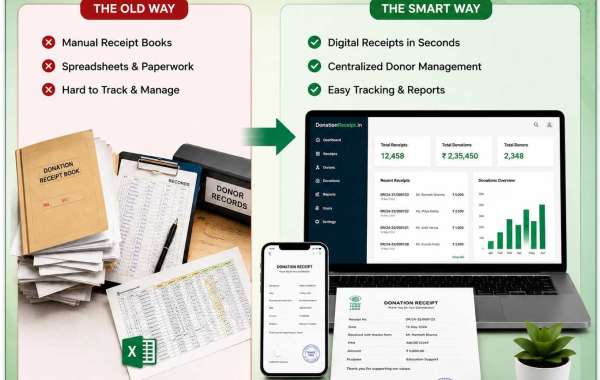
An NGO donation receipt is an important document issued by a non-governmental organization after receiving a donation from an individual, company, or other donor. It confirms that the NGO has received the contribution and provides a record of the donation.
A properly prepared receipt can help both the NGO and donor maintain accurate financial records. For eligible donations, it may also form part of the documentation required for claiming a tax deduction under applicable provisions.
In India, NGOs and other eligible institutions approved under Section 80G have specific reporting and certification requirements for donations. The Income Tax Department states that eligible organizations must report donations through Form 10BD and provide donors with Form 10BE.
What Is an NGO Donation Receipt?
An NGO donation receipt is a written or digital acknowledgment confirming that an NGO has received a donation.
It generally includes information about:
- NGO name
- NGO address
- Donor name
- Donation amount
- Date of donation
- Payment method
- Receipt number
- NGO PAN
- Registration or approval details, where applicable
- Transaction reference number
- Authorized signatory
The exact information can vary according to the NGO's requirements and the applicable legal or tax rules.
Why Is an NGO Donation Receipt Important?
A donation receipt is useful for both donors and NGOs.
1. Proof of Donation
The receipt confirms that the donor made a contribution to the NGO.
2. Financial Record
Donors can keep the receipt with their financial documents as evidence of the contribution.
3. Tax Documentation
Where a donation is eligible for a tax deduction, the donor may need supporting information and certificates. The Income Tax Department states that details such as the donee's name, PAN, address, 80G registration information, and donation amount can be required for an 80G claim.
4. Transparency
Providing a proper receipt helps an NGO maintain transparent records of donations received.
5. Better Donor Management
Unique receipt numbers and accurate transaction information make it easier for NGOs to track contributions and maintain donor records.
What Details Should an NGO Donation Receipt Include?
A professional NGO donation receipt should contain clear and accurate information.
NGO Details
The receipt may include:
- Full NGO name
- Registered address
- PAN
- Contact details
- Registration details
- Applicable 80G approval information
Donor Details
The donor section may contain:
- Full name
- Address
- PAN, where applicable
- Contact information
Donation Details
The transaction section can include:
- Receipt number
- Donation date
- Donation amount
- Amount in words
- Payment method
- Transaction ID
- Purpose of donation
- Relevant tax information
Keeping these details accurate is especially important when the donation is intended to be considered for tax purposes.
NGO Donation Receipt Format
A simple NGO donation receipt can follow this structure:
NGO DONATION RECEIPT
NGO Name: ABC Foundation
Address: [Complete Address]
PAN: [PAN Number]
80G Details: [Applicable Details]
Receipt No.: NGO-00125
Date: [Date]
Received From: [Donor Name]
Donation Amount: ₹10,000
Amount in Words: Ten Thousand Rupees Only
Payment Method: Online Transfer
Transaction ID: [Transaction Reference]
Purpose: Charitable Donation
Authorized Signatory
This is a basic example. NGOs should use a receipt format appropriate to their registration, accounting, and tax requirements.
NGO Donation Receipt for 80G
Many donors specifically search for an NGO donation receipt for 80G because eligible donations may qualify for a deduction under Section 80G.
However, not every donation automatically qualifies for a deduction. The eligibility depends on the receiving organization, type of donation, payment method, and applicable tax rules.
The Income Tax Department currently states that Section 80G provides different deduction categories, including 100% and 50% deductions, depending on the type of eligible donation. It also states that donations made in cash exceeding ₹2,000 are not eligible for deduction under Section 80G.
Donors should therefore verify the NGO's applicable eligibility before relying on a donation for a tax deduction.
NGO Donation Receipt and Form 10BE
For an NGO approved under Section 80G, the donation receipt may not be the only document relevant to tax reporting.
The Income Tax Department explains that eligible trusts, institutions, and NGOs are required to furnish a statement of donations in Form 10BD. After filing the statement, the organization must issue Form 10BE, the certificate of donation, to the donor.
Form 10BE contains details about the organization, its applicable approval information, the donation, and the donor.
Therefore, donors should retain both their donation receipt and any applicable tax certificate provided by the NGO.
How to Get an NGO Donation Receipt
Getting an NGO donation receipt is usually straightforward.
Step 1: Choose an NGO
Select an NGO or charitable organization and check its official details.
Step 2: Make the Donation
Complete the contribution using an accepted payment method such as online transfer, payment gateway, cheque, or another permitted method.
Step 3: Provide Donor Information
Enter your name and other required details carefully. Correct information can help avoid problems with donation records.
Step 4: Save the Payment Reference
Keep the transaction ID, bank reference number, payment confirmation, or other proof of payment.
Step 5: Receive the Receipt
The NGO may issue a receipt immediately or send it later through email or another digital method.
Step 6: Keep the Documents
Store the receipt and any applicable Form 10BE or other tax documentation safely.
Digital NGO Donation Receipt
Many NGOs now provide digital donation receipts instead of paper receipts.
A digital receipt may be delivered through:
- Online donation portal
- Donor dashboard
- Payment platform
Digital receipts make it easier for donors to store, search, and retrieve their donation records.
NGOs can also maintain electronic records to simplify donation tracking and reporting.
Benefits of Digital Donation Receipts for NGOs
Digital receipts can help NGOs:
- Reduce paperwork
- Send receipts quickly
- Maintain organized donor records
- Track transaction details
- Reduce manual errors
- Store records electronically
- Improve communication with donors
For larger organizations, a digital donation management system can also help automate receipt generation and donor communication.
Common Mistakes in NGO Donation Receipts
NGOs should carefully check every receipt before issuing it.
Common mistakes include:
- Incorrect donor name
- Wrong donation amount
- Incorrect transaction number
- Missing PAN
- Incorrect NGO information
- Wrong donation date
- Incorrect receipt number
- Missing applicable registration details
Donors should also check their receipts and contact the NGO if any important information is incorrect.
Tips for Donors Before Making a Donation
Before donating to an NGO, consider these simple steps:
- Check the NGO's official name and details.
- Use the organization's official donation channel.
- Provide your details accurately.
- Save the payment confirmation.
- Request an NGO donation receipt.
- Check the receipt after receiving it.
- Keep the receipt safely.
- If claiming a tax deduction, verify the organization's eligibility for the relevant year.
- Keep Form 10BE where applicable.
The Income Tax Department advises donors to verify whether the donee was registered under the relevant provisions for the assessment year for which a deduction is being claimed.
Tips for NGOs Issuing Donation Receipts
NGOs can improve their receipt process by:
- Using unique receipt numbers
- Recording donor details accurately
- Maintaining transaction references
- Keeping digital backups
- Using a consistent receipt format
- Checking PAN and registration information
- Following applicable tax reporting requirements
- Issuing required donation certificates on time
For organizations covered by the current Section 80G reporting framework, the Income Tax Department states that Form 10BD is mandatory and Form 10BE must be issued to donors. The stated due date for both is 31 May immediately following the end of the financial year in which the donation was received.
Conclusion
An NGO donation receipt is an important record that confirms a contribution made to a non-governmental organization. It provides useful information about the donor, NGO, donation amount, date, and payment transaction.
For eligible donations, additional tax documentation may be required. NGOs approved under Section 80G have specific reporting responsibilities, including Form 10BD and Form 10BE requirements.
Whether you are a donor or an NGO, maintaining accurate donation records helps improve transparency, simplify financial management, and keep important documentation organized.
FAQs
1. What is an NGO donation receipt?
An NGO donation receipt is a document issued by an NGO to acknowledge that it has received a donation from an individual, company, or other donor.
2. What information should an NGO donation receipt contain?
It can include the NGO's name, PAN, address, donor name, donation amount, date, payment method, receipt number, transaction reference, and applicable registration details.
3. Can an NGO donation receipt be used for an 80G deduction?
An eligible donation may qualify for an 80G deduction subject to the applicable conditions. The donor should verify the NGO's eligibility and maintain the required documentation.
4. What is Form 10BE?
Form 10BE is a certificate of donation issued by eligible organizations to donors after the required donation statement is filed.
5. What is Form 10BD?
Form 10BD is the statement of donations that eligible NGOs, trusts, and institutions approved under the relevant provisions are required to furnish to the Income Tax Department.
6. Can an NGO issue a digital donation receipt?
Yes. NGOs can provide donation receipts electronically through email, PDF files, online portals, or donor management systems.
7. Should donors keep their NGO donation receipts?
Yes. Donors should retain their receipts and any applicable tax certificates as part of their financial and tax records.