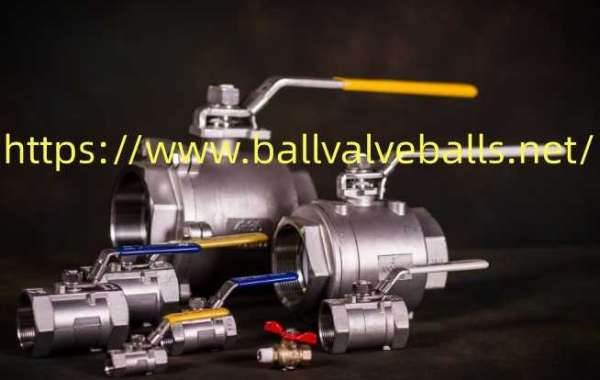
Ball Valve Accessories purchasing involves several technical decisions that can influence installation, maintenance, and equipment compatibility. Buyers should identify the required components, confirm their dimensions, review material specifications, and establish inspection requirements before approving an order. Clear communication with a manufacturer helps reduce uncertainty during quotation and production, while a documented purchasing process makes it easier to verify whether the delivered parts match the agreed specifications.
Identify the Required Parts and Their Functions
Start by determining which components are needed for the intended application. Depending on the assembly, the order may include mounting brackets, stem adapters, couplings, operating handles, actuator mounting kits, position indicators, or limit switch boxes.
Each item serves a particular function. A mounting bracket supports an actuator, while a coupling transfers rotational movement between connected components. A position indicator provides visual feedback, and a limit switch can communicate position information to a control system.
Buyers should distinguish between replacement purchases and new equipment projects. Replacement parts generally need to match existing interfaces, while new installations may allow more flexibility in design and mounting arrangements.
Prepare a list of components, quantities, and intended functions before requesting a quotation. If several parts must work together, provide an assembly drawing so the manufacturer can review the complete configuration rather than assessing each item in isolation.
Check Dimensions and Connection Details
Dimensional accuracy is an important consideration when ordering components that must fit together. Parts with similar appearances may have different mounting patterns, shaft profiles, fastening methods, or interface dimensions.
For mounting brackets, verify bolt-hole spacing, mounting height, and connection geometry. For couplings and adapters, check the shaft profile, drive dimensions, engagement length, and securing method. These measurements help establish whether the parts can be assembled as intended.
When connecting an actuator to existing equipment, review the interface requirements on both sides. Standards such as ISO 5211 may apply to certain mounting arrangements, but the actual equipment dimensions should still be confirmed.
Provide a current technical drawing whenever possible. If no drawing is available, supply accurate measurements and clear photographs of the existing assembly. Request written confirmation of critical dimensions before production begins, especially for customized replacement parts.
Select Materials for the Intended Environment
Material selection should reflect the working environment and mechanical demands of the application. Buyers should consider temperature, humidity, corrosion exposure, vibration, and applied loads when evaluating suitable options.
Depending on the design, manufacturers may offer carbon steel, stainless steel, aluminum alloys, or other engineering materials. Surface treatments may also be specified to address environmental exposure or project requirements.
Different components within one assembly may have different material needs. A supporting bracket, for example, may require different properties from a precision coupling or an electrical control housing. Each part should be evaluated according to its function and the conditions it will encounter.
For outdoor installations or environments involving moisture and chemicals, discuss suitable materials and finishes with the manufacturer. If the project requires traceability, identify the necessary material certificates, coating records, and batch identification documents before submitting the order.
Confirm Actuator and Control Compatibility
Automated applications require coordination between mechanical interfaces and control devices. Buyers should identify whether the system uses pneumatic or electric actuation and provide the corresponding mounting information.
For mounting kits, review base dimensions, coupling profiles, alignment requirements, and available installation space. An unsuitable mounting arrangement may complicate assembly or create alignment issues.
Control equipment may include limit switch boxes, solenoid valves, position indicators, and positioners. Depending on the project, buyers may need to specify electrical connections, signal types, enclosure ratings, and installation positions.
A complete assembly drawing can help identify possible conflicts before installation. This is particularly useful when several devices share limited space or when customized brackets are required.
Ask the manufacturer to review uncertain connection details before approving the final specification. Confirming these requirements in advance can reduce changes during assembly and commissioning.
Establish Inspection and Acceptance Requirements
Before placing an order, determine how the finished components will be inspected. Relevant checks may include dimensional measurement, visual examination, surface finish verification, material identification, and confirmation of mounting interfaces.
For customized parts, sample approval can help verify dimensions and assembly fit before batch production. Buyers should agree on the inspection method, acceptance criteria, and measurements that need to be recorded.
Ask the manufacturer which quality documents are available. Depending on the specification, these may include dimensional reports, material certificates, coating records, and batch identification information.
If an inspection result differs from the approved specification, establish how the discrepancy will be reported and resolved. Any proposed change should receive appropriate written approval before it becomes part of the production requirements.
For projects with formal quality procedures, define the inspection plan before manufacturing starts. This helps the purchasing team understand what evidence to expect and how incoming checks will be conducted.
Review Quotations, Packaging, and Delivery
When comparing suppliers, confirm that each quotation covers the same technical scope. Review material grades, dimensions, surface treatments, included components, inspection requirements, and estimated production schedules.
Check whether tooling, sample preparation, documentation, and packaging are included in the quoted price. For customized orders, clarify minimum quantities, setup charges, payment terms, and procedures for approving drawing revisions.
Packaging should protect components against scratches, impact, and contamination during transportation. Depending on the surface finish and shipping conditions, individual wrapping and separation materials may be appropriate.
Before dispatch, confirm quantities, labels, packing lists, shipping arrangements, and required export documents. Compare the final order confirmation with the approved drawing and quotation to ensure that all specifications remain consistent.For industrial purchasing teams seeking customized component solutions, ballvalveballs provides a starting point for discussing technical drawings, material options, machining requirements, and inspection arrangements. Visit https://www.ballvalveballs.net/ to review the product range and contact the company with your drawings, application details, quantities, and delivery expectations. Sharing these details during the initial inquiry can help clarify technical requirements and support a more efficient quotation process for your next industrial project.