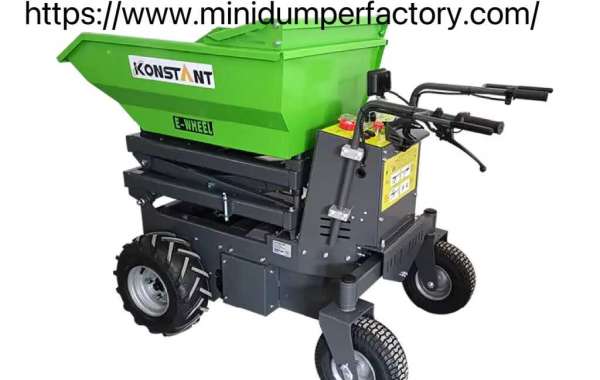
Mini Dumper Manufacturer compact models are designed for material transportation in construction, landscaping, agricultural, and property maintenance environments where working space may be limited. For importers, distributors, and project buyers, selecting suitable equipment requires more than checking its external dimensions. Payload, access width, ground conditions, power source, and unloading arrangements all influence whether a machine can meet practical operating requirements. Understanding these factors can help buyers prepare clear specifications before requesting a quotation.
Measure the Narrowest Access Point
Working width is an important consideration when equipment must pass through gates, corridors, garden entrances, or indoor passages. Buyers should measure the narrowest point along the entire transportation route rather than relying only on the entrance dimensions.
Turning space also deserves attention. A machine may pass through a narrow opening but still have difficulty changing direction once it reaches the working area. Length, overall height, handle position, and turning requirements should therefore be reviewed together.
Before placing an order, buyers can provide site measurements and photographs to help confirm whether the proposed configuration is appropriate. This step can reduce the risk of receiving equipment that cannot reach its intended operating area.
Match Payload With Daily Material Requirements
A smaller machine does not automatically mean lower operating costs. Buyers need to consider how much material must be transported during a typical working day and how frequently each trip will be repeated.
Different materials also have different densities. Soil, gravel, sand, wood chips, and construction debris may occupy similar volumes while creating different loads. The rated payload and container capacity should therefore be checked separately.
A useful purchasing approach is to estimate the average load per trip, total daily transportation volume, and expected working hours. These figures help buyers compare suitable configurations without selecting a unit that is unnecessarily large or unable to handle the intended workload.
Select Tracks or Wheels According to the Surface
Ground conditions influence mobility, traction, and maneuverability. Tracked configurations can be suitable for soft soil, muddy areas, and uneven surfaces because their contact area helps distribute machine weight. Wheeled versions may be practical on firm, relatively smooth ground where easy movement is a priority.
Neither structure is suitable for every application. Buyers should consider slopes, surface hardness, turning frequency, and the possibility of operating after rainfall. They should also review the specified operating limits for the selected model rather than assuming that all configurations share the same capabilities.
For projects involving several types of terrain, discussing the usual working conditions before ordering can help narrow down the available choices.
Compare Battery and Gasoline Power Options
Power selection affects daily operation, maintenance planning, and site suitability. Battery-powered equipment may be considered for locations where lower operating noise or the absence of direct exhaust emissions is important. However, buyers should check charging arrangements, expected working duration, and battery replacement requirements.
Gasoline-powered options may suit applications where refueling is more convenient than arranging charging facilities. Engine specifications, fuel consumption, routine servicing, and local operating requirements should be included in the comparison.
For international orders, buyers should also confirm whether the selected power system can meet the regulations and service conditions in the destination market. Clear information about the intended application helps avoid mismatches between equipment configuration and local requirements.
Review the Container and Unloading Method
The material container affects loading convenience and the way goods are discharged. Buyers should consider its volume, shape, material, and opening arrangement according to the materials being handled.
A standard tipping arrangement may be sufficient for basic ground-level unloading. Other projects may require a different discharge height or direction to transfer materials into a designated collection area. These requirements should be confirmed before selecting optional configurations.
It is also useful to ask about the container structure, surface treatment, and replacement procedure. Such details can influence routine maintenance and long-term usability, particularly in applications involving abrasive or irregular materials.
Check Operator Controls and Maintenance Access
Compact dimensions should not come at the expense of practical operation. Buyers can review handle positioning, control layout, visibility, braking arrangements, and access to frequently serviced components.
Maintenance planning is equally important for overseas purchasers. Ask about the recommended inspection schedule, common replacement parts, maintenance instructions, and availability of technical assistance. Clear documentation can help distributors support their customers after delivery.
When evaluating different configurations, buyers should consider both initial purchasing requirements and the resources needed to keep the equipment in service.
Prepare Clear Requirements Before Ordering
A detailed inquiry makes communication more efficient. Buyers can prepare information about the intended application, site dimensions, material type, required payload, ground conditions, preferred power source, and unloading method. Photos or a simple site drawing may also help explain special requirements.
At minidumperfactory, buyers can discuss configuration details and confirm which options are suitable for their intended applications. Before confirming an order, review the quotation, technical specifications, included accessories, packaging details, delivery arrangements, and available after-sales support.For distributors, contractors, and businesses planning to purchase compact material-handling equipment, choosing a suitable configuration starts with understanding the actual demands of the project. The product range and company information at https://www.minidumperfactory.com/product/ provide a convenient starting point for reviewing available options and contacting minidumperfactory about specifications, customization, and purchasing requirements.