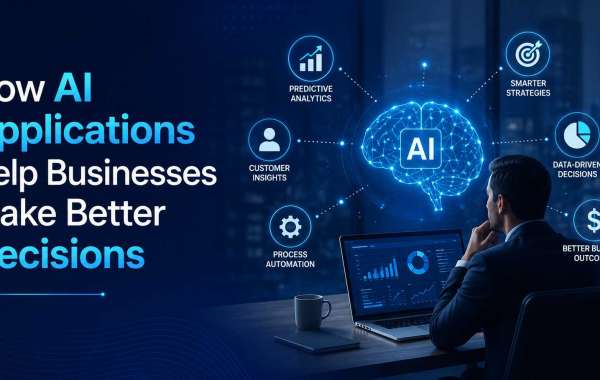
The Decision Problem Every Business Owner Knows
Every business owner has sat in a meeting where a critical decision needed to be made — and the information available was either incomplete, outdated, or buried somewhere in a spreadsheet nobody could find in time. Pricing strategies set on gut feel. Inventory decisions made from last month's reports. Customer retention efforts triggered after the customer had already left. Hiring choices based on pattern-matching that nobody could clearly articulate. These are not failures of effort or intelligence. They are failures of information infrastructure — and they cost businesses far more than most owners realize.
The cumulative cost of poor decision-making in business is staggering. Industry analysts consistently find that a significant portion of business decisions are made with insufficient data, at the wrong time, or based on cognitive biases that skew outcomes in ways the decision-maker never notices. The good news is that this is precisely the problem that AI applications were built to solve. Not in an abstract, futuristic sense — but right now, in production environments, at companies of every size and industry. Understanding what AI applications actually do for decision-making, and how to access that capability, is one of the most valuable strategic conversations a business owner can have today.
What AI Applications Actually Do for Decision-Making
Let's be specific rather than aspirational. When people talk about AI improving business decisions, they're describing a concrete set of capabilities that change the quality, speed, and confidence of choices made at every level of an organization. These capabilities fall into a few distinct categories that are worth understanding individually before looking at how they combine.
The first is pattern recognition at scale . Human analysts can review hundreds of data points. AI applications can review millions — simultaneously, continuously, and without fatigue. When your customer behavior data, sales records, supply chain signals, and market indicators are fed into a well-built AI system, it surfaces patterns that no human team could reliably identify. The second is predictive modeling — using historical patterns to generate probabilistic forecasts about future outcomes. Not certainties, but probability-weighted scenarios that allow decision-makers to act with informed confidence rather than hopeful guesswork. The third is real-time processing — the ability to update analysis and recommendations as new data arrives, rather than waiting for the monthly report cycle that yields insights stale before they're acted upon. Professional AI application development services build systems that deliver all three, integrated with the specific data sources and workflows your business actually runs on. The result is a decision environment that is fundamentally different from the one most businesses currently operating in:
- Faster decisions — AI-processed insights surface in minutes rather than days, compressing the time between a market signal and a business response
- More consistent decisions — AI systems apply the same analytical framework every time, eliminating the variability that comes from different team members interpreting the same data differently
- Better-calibrated risk assessment — probabilistic outputs give decision-makers an honest view of uncertainty rather than false confidence in point estimates
- Reduced cognitive load — when AI handles data aggregation and pattern identification, human decision-makers can focus on judgment, strategy, and the qualitative context that machines cannot replicate
- Auditable reasoning — well-designed AI systems document the data and logic behind each recommendation, creating accountability and enabling continuous improvement of the decision process itself
Five Business Decision Domains Where AI Creates the Most Value
The impact of AI on business decision-making is not uniform across every function. In some domains, AI creates marginal improvements. In others, it fundamentally transforms the quality and economics of decisions. For business owners evaluating where to start, understanding which domains deliver the highest return on AI investment is the right first question. Working with a professional AI application development company begins with exactly this mapping — identifying where your most consequential decisions live and where the data exists to support AI-driven improvement.
The five domains where AI consistently creates the most dramatic decision-making improvements share a common characteristic: they involve high-frequency decisions, large data inputs, meaningful financial consequences, and historically poor visibility into outcomes. In each of these domains, the gap between AI-supported and unaided decision-making is not marginal — it's transformational. Here is where the returns on AI investment in decision support are most consistently compelling:
- Demand forecasting and inventory management — AI models analyzing historical sales, seasonality patterns, supplier lead times, and external signals like weather or economic indicators dramatically outperform traditional forecasting methods, reducing both stockouts and excess inventory simultaneously. Businesses using AI forecasting report inventory carrying cost reductions of 20–50%
- Customer churn prediction and retention — identifying which customers are at risk of leaving before they leave is worth far more than any win-back campaign after the fact. AI models trained on behavioral data — login frequency, feature usage, support ticket patterns, payment history — can flag at-risk accounts weeks before cancellation with actionable accuracy
- Pricing optimization — dynamic pricing models that account for demand elasticity, competitor pricing, inventory levels, customer segment, and timing consistently outperform static pricing strategies. This is not just for airlines and hotels; it applies to SaaS, e-commerce, professional services, and logistics
- Financial forecasting and cash flow management — AI systems that integrate accounts receivable patterns, payment history, sales pipeline data, and external economic signals produce cash flow forecasts significantly more accurate than traditional methods, allowing treasury decisions to be made with genuine confidence
- Talent acquisition and workforce planning — AI-assisted screening, skills matching, and attrition prediction allow HR functions to make hiring and retention decisions with data clarity that manual processes cannot provide, reducing mis-hires and improving team performance
From Reactive to Predictive: The Real Transformation
Most businesses currently operate in a reactive decision mode. Something happens — a sales dip, a customer complaint spike, a supply chain disruption — and the organization responds. The response is often appropriate, but it's always delayed. By the time the signal has been detected, analyzed, escalated, and acted upon, the optimal intervention window has frequently passed. AI applications change this dynamic fundamentally by shifting the operational model from reactive to predictive.
This shift is more significant than it sounds. A business that can predict a customer churn event three weeks before it occurs has a fundamentally different customer retention capability than one that detects it after cancellation. A business that forecasts a demand surge two weeks out can adjust procurement, staffing, and logistics accordingly rather than scrambling to respond after stockouts have already damaged customer relationships. A business that identifies a credit risk in a customer account before extending terms avoids the bad debt entirely rather than pursuing collection after the fact. The best AI development company partners don't just build systems that describe what happened — they build systems that anticipate what is likely to happen and give your team the lead time to respond intelligently. This predictive capability is where the most significant competitive advantages from AI investment are currently being built. The operational implications of the reactive-to-predictive shift:
- Customer success teams move from firefighting to proactive intervention, addressing issues before they escalate into churn or complaints
- Supply chain managers shift from expediting and crisis management to optimized planning, reducing both costs and stockout events simultaneously
- Financial controllers transition from month-end reporting to continuous financial monitoring with real-time variance alerts that surface issues while they're still correctable
- Sales leaders move from lagging pipeline reviews to predictive revenue forecasting that identifies deal risks and opportunities weeks before they materialize in closed/lost data
- Operations managers gain the ability to predict equipment failures, capacity constraints, and process bottlenecks before they cause downtime or customer impact
What Separates Good AI Applications from Expensive Noise
Not all AI applications deliver on their promise. The market is full of products that generate impressive-looking dashboards while producing recommendations that don't reflect the actual complexity of the business problem they're meant to solve. For business owners evaluating AI investments, understanding what separates genuinely valuable AI applications from sophisticated noise is an essential skill — one that protects both budget and organizational credibility.
The core differentiator between AI applications that create real decision value and those that don't is almost never the underlying model sophistication. It's the quality of data integration, the relevance of the training data to the specific business context, and the thoughtfulness of how AI outputs are connected to actual decision workflows. A generic AI model trained on industry-average data and disconnected from your specific business systems will produce generic insights that don't account for what makes your business different. A custom system built by a top AI development company — trained on your data, integrated with your systems, and designed around your actual decision workflows — produces recommendations that your team can act on with confidence. The evaluation criteria that distinguish genuine AI decision-support capability from marketing:
- Data integration depth — does the system connect to your actual operational data sources (CRM, ERP, e-commerce platform, financial systems) or does it work with manually uploaded exports that are always out of date?
- Decision workflow integration — are AI recommendations surfaced where decisions actually get made (inside the tools your team uses daily) or in a separate dashboard that requires a separate login and deliberate effort to consult?
- Explainability — can the system articulate why it made a recommendation in terms that your decision-makers can evaluate and trust, or does it produce a score with no interpretable rationale?
- Feedback loops — does the system learn from outcomes (was the at-risk customer actually retained? did the demand forecast prove accurate?) and improve its models over time?
- Customization to your context — is the system trained on data relevant to your industry, your customer segments, and your business model, or is it a horizontal product applied without adaptation?
Choosing the Right AI Development Partner
The decision to invest in AI-powered decision support is sound. The risk is in the execution — specifically in choosing the wrong development partner. The AI development company you work with will make decisions that affect the quality of every business decision your AI system subsequently influences. That's an enormous amount of downstream leverage on a single vendor selection, and it deserves proportionate evaluation rigor.
The landscape of companies offering AI development services has expanded dramatically as AI has moved from research to production deployment. The range in quality is equally dramatic. At one end are teams with genuine machine learning expertise, deep experience deploying AI in production business environments, and the business domain knowledge to understand what decisions actually need to be supported and why. At the other end are development shops that have rebranded existing software capabilities with AI terminology. Navigating this landscape requires asking the right questions and evaluating answers with informed skepticism. The questions that surface genuine AI decision-support capability:
- "Show us a production deployment where your AI improved a specific measurable business outcome" — not a demo, not a prototype, not a case study written in the past tense without metrics. A live system with documented outcomes
- "How do you handle model drift over time?" — AI models trained on historical data become less accurate as the world changes; a serious partner has a monitoring and retraining framework, not a launch-and-leave mentality
- "What does your data integration architecture look like?" — understanding how they connect to business data systems reveals whether they've solved the hardest part of the problem
- "How do you validate model accuracy before production deployment?" — the answer should involve holdout datasets, backtesting against historical decisions, and staged rollout, not just internal testing
- "What's your approach to human-AI decision collaboration?" — the best AI systems augment human judgment rather than attempting to replace it; partners who understand this distinction build better systems
The Compounding Advantage of Earlier Adoption
There is a temporal dimension to AI investment in business decision-making that doesn't apply to most technology investments: the systems get better over time as they accumulate more data from your specific business environment. An AI forecasting model that has twelve months of your sales data is meaningfully more accurate than one that has three months. One with three years of data, including multiple seasonal cycles and market shifts, is dramatically more accurate than either. This compounding data advantage means that businesses that invest in AI-supported decision-making earlier build a capability gap over competitors that widens rather than closes with time.
The AI application development company relationship that delivers the most value is one designed for this long-term trajectory — not a project that ends at deployment, but a partnership where models are continuously improved, new decision domains are progressively addressed, and the organizational capability to use AI outputs effectively grows alongside the technical capability to generate them. Business owners who think about AI as a single project investment consistently underperform those who think about it as an ongoing operational capability — one that becomes more valuable every quarter as the data accumulates and the models mature.
Closing: Better Information, Better Decisions, Better Business
The businesses that will consistently outperform their markets over the next decade are not necessarily the ones with the best products, the largest teams, or the biggest budgets. They are the ones making better decisions — faster, more consistently, and with clearer visibility into outcomes and risks. AI applications are the mechanism through which that decision quality advantage is being built, and the infrastructure is now accessible to businesses at every scale, not just enterprises with data science departments.
The entry point is identifying your highest-consequence, highest-frequency decision domain — the one where better information would most directly translate to better outcomes — and building from there with a capable AI development services partner. The compounding returns from that starting investment will fund and justify expansion into every other decision domain in your business. Start with one decision. Make it better. Then build from that foundation.