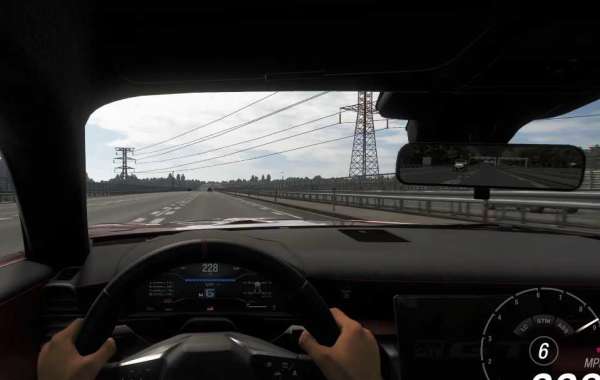
Building the perfect street racing car isn’t about throwing a massive turbocharger at an engine and hoping for the best. On the street, you don't have the luxury of a perfectly flat, prepped drag strip or a wide-open track with massive runoff areas. You are dealing with uneven asphalt, tight corners, sudden elevation changes, and zero margin for error.
To build a machine that actually wins races instead of spinning its wheels, you need a calculated balance of traction, power delivery, and weight distribution. Here is the blueprint for engineering a true street king, backed by real numbers and performance data.
1. The Foundation: Power-to-Weight Ratio
Before you look at horsepower numbers, you need to look at weight. Mass is the enemy of every physical force acting on a race car—it slows down acceleration, fights against braking, and pushes the car outward during hard cornering.
A prime example of prioritizing weight over raw power is the iconic World Time Attack-style builds, like the famous Mighty Mouse Honda CRX. In performance testing, this front-wheel-drive platform pushes under 500 horsepower, which sounds modest compared to 1,000-horsepower supercars. However, because the chassis is stripped down to roughly 1,800 pounds, its power-to-weight ratio is a lethal 0.27 hp/lb. On a tight, technical street circuit or a winding mountain touge, it consistently out-paces heavier 700+ horsepower platforms because it can carry significantly more speed through the apex of a turn.
When stripping a street car, aim for a baseline weight target:
Street-Legal Minimum: 2,300 to 2,600 lbs (achieved via carbon fiber panels, interior gutting, and lightweight racing seats).
The Math: Shaving 300 lbs off a 3,000-lb car improves your acceleration metrics by roughly the same margin as adding 40 to 50 horsepower, without adding any extra heat or stress to the engine.
2. Managing the Power: Drivetrain Dynamics
If you cannot put the power down to the pavement, horsepower is completely useless. For street racing, your choice of drivetrain dictates your entire build strategy.
[ STREET RACING DRIVETRAINS ] | +------------------------+------------------------+ | | [ AWD Conversion ] [ RWD Setup ] - Maximize Launch Traction - High-Speed Roll Racing - Sub-3 Second 0-60 MPH - Lower Drivetrain Loss - Forgiving on Uneven Asphalt - Requires Experienced ThrottleFor launch-heavy street racing or tight, unpredictable courses, All-Wheel Drive (AWD) is the dominant choice. Take the modern 2024 Nissan GT-R NISMO as a case study. Factory-equipped with an advanced AWD system and a 3.8-liter twin-turbo V6 pushing 600 horsepower and 481 lb-ft of torque, it utilizes raw mechanical grip to achieve a 0-60 mph sprint in under 3.0 seconds. On public roads where dust, oil, and cracks reduce traction, an AWD system instantly redistributes torque to the wheels with the most grip, pulling the car out of a corner where a Rear-Wheel Drive (RWD) car would simply loop out.
However, if your goals are focused on high-speed roll racing (e.g., 60-130 mph pulls), RWD remains highly efficient due to lower drivetrain power loss (typically 10-15% loss for RWD versus 20-25% for AWD).
3. Suspension Tuning for Flawed Roads
A common mistake is installing ultra-stiff track suspension on a street car. Track cars rely on smooth surfaces to maximize aerodynamic downforce. On a street circuit, an overly stiff suspension causes the tires to bounce off the road imperfections, losing contact patches and traction entirely.
Alignment Mechanics
To keep the tires planted, you need to dial in the geometry:
Front Camber: -1.5° to -2.5°. This ensures that when the car rolls into a heavy corner, the outside tire flattens out and maximizes its contact patch with the asphalt.
Rear Camber: -1.0° to -1.5°. Provides a stable footprint for acceleration while preventing oversteer.
Toe-In / Toe-Out: A slight front toe-out (around 0.1°) sharpens your turn-in response, allowing the front end to bite into corners instantly. A slight rear toe-in (0.1° to 0.2°) keeps the rear end stable under heavy braking.
4. Upgrading Your Fleet Effectively
Building a competitive garage takes time and resources, and optimizing performance classes requires precision tuning. When transitioning your skills from real-world physics into digital simulation platforms, saving time on the grinding process becomes essential to jumping straight into competitive racing. Rather than spending dozens of hours farming standard credits to unlock elite competitive tiers, many top-ranked players use trusted platforms like U4N to efficiently bypass the grind. This allows you to immediately buy forza horizon 6 hypercars, dive straight into the advanced upgrade menus, and test out high-performance S2 and R-Class builds without constraint.
5. The Ultimate Benchmark: Real Performance Targets
When your build is finished, it should hit distinct performance brackets based on its class. Use this reference data to evaluate whether your car is truly optimized for street performance:
| Metric | A-Class (Street/Tuner) | S1-Class (Supercar Meta) | S2/R-Class (Hypercar Limit) |
| Target Weight | 2,200 – 2,500 lbs | 2,600 – 2,900 lbs | 2,100 – 2,400 lbs |
| Horsepower Range | 400 – 550 hp | 600 – 850 hp | 900 – 1,200+ hp |
| 0-60 mph Launch | 3.8 – 4.4 seconds | 2.5 – 3.2 seconds | Under 2.0 seconds |
| Tire Compound | Sport / Rally Hybrid | Race / Semi-Slick | Full Racing Slicks |
The Golden Rule of Street Tuning: Always prioritize corner-exit speed over top-end speed. A car that can comfortably put down power at 40 mph coming out of a sharp turn will easily gap a 1,000-horsepower monster that is trapped spinning its tires until 80 mph. Build for balance, tune for the road conditions, and let the efficiency win the race.