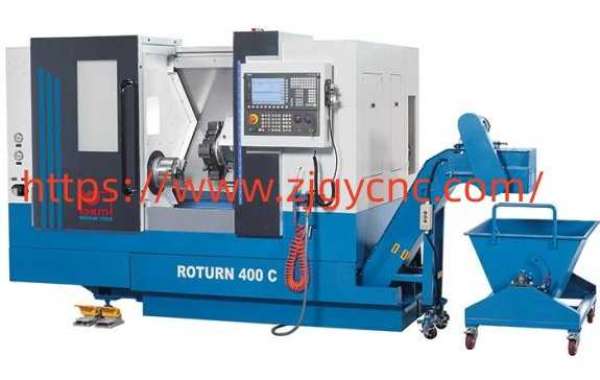
Compact CNC Lathe is a computer controlled turning machine designed around a smaller working envelope and reduced floor requirement. It rotates a workpiece while a cutting tool follows programmed movements to remove material and create cylindrical forms. For small workshops, this format can be relevant when available floor area, electrical capacity, production volume, and component size place limits on larger industrial machinery. Recent industry discussion also points to compact machine formats as an option for small manufacturers, prototype shops, maintenance departments, and contract machining teams with limited space.
Why Does Floor Space Matter?
Floor space has a direct effect on how a workshop organizes daily production. A smaller machine footprint can leave additional room for material storage, inspection benches, tooling cabinets, workholding systems, and operator movement.
For a small business operating from an existing facility, adding machinery without expanding the building can be an important consideration. A compact format may allow a workshop to reorganize its production area while keeping walking paths and service access in mind.
However, buyers should measure the complete installation area rather than the machine body alone. Clearance for loading, maintenance, electrical connections, chip handling, and operator access should also be included.
What Parts Are Suitable?
The practical application depends heavily on component size. Small and medium cylindrical parts can often fit naturally within this type of turning environment.
Common examples include shafts, bushings, pins, sleeves, threaded fittings, rollers, spacers, and replacement components. Prototype work can also benefit when a workshop needs to produce individual parts without relying on outside suppliers.
A recent industry source notes that compact turning machinery can be useful for small toolroom work, prototyping, and small part fabrication.
Before purchasing, businesses should compare their actual part dimensions with the available working envelope. This helps prevent a mismatch between machine capacity and daily production requirements.
How Does Programmable Control Help?
Computer based control allows operators to create machining programs that define tool movement, spindle behavior, cutting sequences, and other process conditions.
For repeated components, a stored program can reduce the need to manually recreate each movement. This can be useful for small workshops handling recurring customer orders.
The same principle can also support prototype production. An operator can prepare a program for one component, make adjustments after inspection, and then use the revised sequence for later pieces.
This flexibility gives small manufacturers another way to manage different jobs without relying entirely on manual control.
Can It Support Short Production Runs?
Small workshops do not always produce thousands of identical parts. Their workload may include replacement components, prototypes, custom orders, repair parts, and short batches.
A programmable turning platform can suit this environment because production instructions can be changed between jobs. Tool selection and workholding can also be adjusted according to the component.
This makes the format relevant to businesses that value production flexibility. Recent industry coverage identifies small batch work and prototyping as common applications for compact turning machinery.
What About Power And Installation?
Installation conditions deserve attention before any purchase. Smaller workshops may have different electrical arrangements from large factories. Available voltage, floor conditions, ventilation, coolant arrangements, chip collection, and service access should all be reviewed.
The machine should also have enough surrounding space for safe operation and routine maintenance. A smaller body does not mean that the installation area can be reduced without planning.
Power stability can also matter because electronic control systems depend on suitable electrical conditions during operation. Workshops should therefore confirm site requirements with the supplier before installation.
How Can It Help With Prototyping?
Prototype work often involves frequent design changes. A component may need several revisions before the final geometry is approved.
A programmable turning system can support this process by allowing cutting instructions to be modified between trials. This can reduce dependence on fully manual production when several design versions need to be tested.
Research and development teams, technical training facilities, repair shops, and small manufacturing businesses may therefore have practical reasons to consider smaller programmable turning platforms. Compact formats are also used in educational and prototype environments where available space can be limited.
What Should Small Workshops Compare?
A purchasing decision should begin with actual production requirements. Businesses can review:
Component diameter and length
Material types
Required cutting operations
Expected production quantity
Available floor area
Electrical conditions
Tool capacity
Workholding method
Operator experience
Maintenance access
This approach keeps the evaluation connected with real workshop conditions.
A machine with unnecessary capacity may consume space and resources that a small business could use elsewhere. A machine with insufficient working range may create limitations when new orders arrive. Matching the configuration with expected work can therefore make the purchasing process more practical.
How Can Zjgycnc Support Small Workshop Needs?
Zjgycnc provides turning machinery for manufacturers, repair businesses, prototype workshops, and component producers handling different machining tasks. Its product range can be considered by businesses producing shafts, sleeves, fittings, pins, bushings, and other rotational components.
For buyers, the selection process can begin with part dimensions, material requirements, production quantity, tooling preferences, installation conditions, and expected future workload. Sharing these details with a supplier can make product discussions more specific and useful.
For workshops reviewing available turning solutions, the Zjgycnc product range is available at https://www.zjgycnc.com/product/