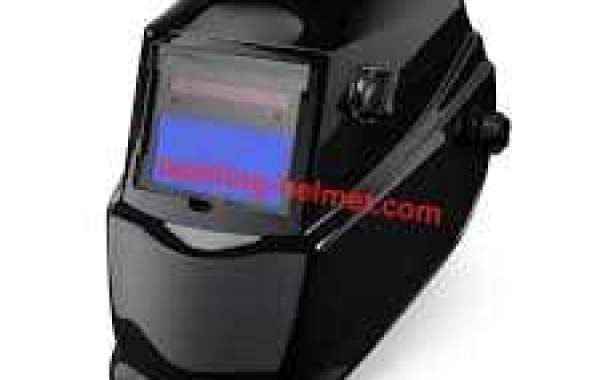
The question of whether welding hood auto darkening improves welding visibility goes to the heart of every welder's daily experience. Welding-helmet, operating under Taizhou Ruiling Optoelectronics Technology Co., Ltd. with the RLINGD brand, has developed solutions that address this core concern, yet the specific factors that determine visual performance deserve careful examination. What exactly enables Welding Hood Auto Darkening to provide clearer sight of the weld zone compared to traditional fixed-shade helmets?
The fundamental visibility challenge in welding involves balancing two competing needs: protection from intense arc radiation and sufficient light transmission to see the workpiece clearly. Fixed-shade helmets force a compromise, with darker shades offering protection but obscuring detail, while lighter shades provide visibility but risk eye damage. Auto-darkening filters solve this dilemma through liquid crystal technology that remains in a light state for setup and transitions to a dark state instantly when the arc strikes. This rapid switching ensures that welders see their starting position clearly and maintain visual continuity throughout the weld.
Optical clarity ratings distinguish superior Welding Hood Auto Darkening performance from basic protection. The optical class rating evaluates factors including dioptric power, astigmatism, light diffusion, and variations in transmittance. High-end helmets achieving 1/1/1/2 classifications provide exceptional clarity with minimal distortion across the entire viewing area. These ratings translate directly into practical advantages: welders see the weld puddle edges clearly, track the arc position accurately, and detect defects immediately. The viewing window size also affects visibility, with larger windows offering expanded peripheral awareness that reduces the need for head movement during welding.
Sensor technology determines how effectively the auto-darkening filter responds to arc initiation. Advanced systems incorporate multiple sensors positioned to detect the arc from various angles, ensuring reliable darkening even when the arc is partially obscured by the electrode or workpiece. This sensor arrangement prevents the frustrating experience of incomplete darkening or flashing that causes eye fatigue and interrupts workflow. The sensitivity adjustment allows welders to fine-tune the activation threshold for different processes, with high sensitivity suitable for low-amperage TIG welding and lower sensitivity appropriate for high-amperage applications where ambient light and spatter might cause false triggering.
The shade range and switching speed directly influence the welder's ability to follow the arc and position the electrode. Variable shade adjustments from DIN9 to DIN13 accommodate different amperages and welding processes, while faster switching speeds minimize the time the eyes are exposed to arc radiation. Professional-grade helmets achieve switching speeds below the perception threshold, eliminating the visual disturbance that occurs when the filter darkens too slowly. The delay control feature allows adjustment of the time the filter remains dark after the arc stops, enabling inspection of the cooling weld without additional flash exposure.
Ambient light conditions affect the visibility provided by auto-darkening helmets. Outdoor welding in direct sunlight requires different settings than indoor work under shop lighting. Some helmets include a grind mode that sets the filter to a fixed shade for non-welding tasks, eliminating the need to remove the helmet during setup or finishing operations. This convenience reduces unnecessary head movement and maintains consistent protection between welding passes.
For those seeking to understand the visibility advantages of auto-darkening technology, the comprehensive resources at https://www.welding-helmet.com/product demonstrate how proper optical engineering translates into practical working benefits. The company's integration of RD, manufacturing, and quality control ensures consistent performance across varied welding conditions. RLINGD's focus on optical precision and sensor reliability provides welders with the visual clarity needed for quality work. The ultimate measure of any Welding Hood Auto Darkening system lies not in technical specifications but in the welder's ability to see clearly, work efficiently, and produce consistent results throughout the day. The question, therefore, extends beyond whether the hood improves visibility, but whether it provides the consistent optical performance that enables precise electrode control and defect-free welds across every application.