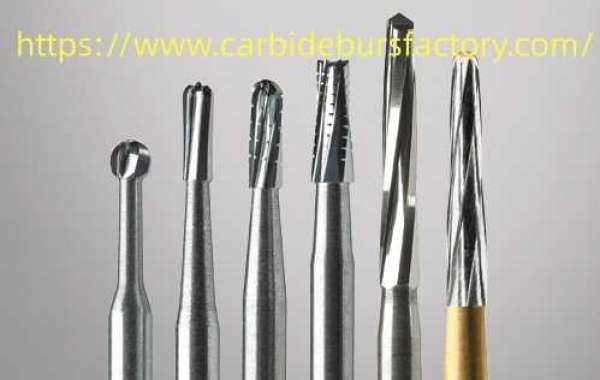
Carbide Endmills can support precise metal cutting by providing a defined cutting geometry for operations such as slotting, profiling, pocketing, contouring, and edge finishing. The actual result depends on tool geometry, workpiece material, machine condition, cutting parameters, and machining strategy. Carbidebursfactory provides cutting solutions for workshops, equipment manufacturers, fabrication teams, and industrial machining applications, helping buyers select configurations according to their production requirements.
Start With The Workpiece Material
Material selection should come before tool selection.
Steel, stainless steel, aluminum, cast iron, and other metals can behave differently during machining. Hardness, toughness, thermal characteristics, and surface condition can all influence the cutting process.
A tool selected for one material may not provide the same result on another.
Machining teams should therefore identify the workpiece material and its condition before choosing the appropriate tool structure.
This creates a more practical starting point for the entire process.
Tool Geometry Affects Cutting Results
Geometry plays an important role in how a milling tool engages with the workpiece.
Diameter, flute arrangement, helix design, cutting length, and end configuration all influence how material is removed.
A smaller diameter may suit detailed areas, while a larger configuration can be useful for broader cutting paths.
The geometry should correspond with the feature being machined.
This is especially important when producing narrow slots, deep pockets, curved profiles, or other detailed shapes.
Flute Structure Matters
Flute design influences chip evacuation and cutting behavior.
When machining materials that generate significant chips, effective chip removal can help reduce interference between the tool and workpiece.
Different flute structures may suit different materials and operations.
Buyers should therefore consider the type of machining being performed, expected chip volume, available coolant, and machine capabilities.
The appropriate arrangement depends on the complete process rather than one isolated specification.
Machine Stability Supports Precision
Tool precision is closely connected with machine condition.
Spindle stability, holding accuracy, alignment, vibration, and workholding can all affect the finished result.
Even a carefully selected tool can produce inconsistent results when the machine setup is unstable.
Machining teams should therefore review the complete setup before changing the cutting product.
Workholding should also keep the component secure and correctly positioned throughout the operation.
A stable setup gives the cutting tool a better foundation for consistent results.
Cutting Parameters Matter
Speed, feed rate, depth of cut, and radial engagement all influence machining behavior.
The appropriate values depend on the tool, material, machine, and operation.
Buyers and technicians should follow relevant application recommendations rather than selecting parameters without considering the complete setup.
A reasonable starting point can then be adjusted according to actual cutting results.
Monitoring vibration, chip formation, surface appearance, and machine load can provide useful feedback during process optimization.
Support For Profiling And Contouring
Many metal components require curved outlines or complex external shapes.
A suitable milling tool can follow programmed paths to create these features.
The diameter and flute structure should correspond with the required contour and available machine access.
Smaller geometries can help reach tighter areas, while broader configurations may be more practical for larger profiles.
The workpiece drawing should therefore be reviewed before choosing the tool.
Pocketing And Slotting Applications
Pocketing removes material from an enclosed area, while slotting creates a defined channel.
Both operations require careful attention to tool diameter, cutting length, chip evacuation, and machine movement.
A configuration that leaves enough clearance can help avoid unnecessary contact with surrounding walls.
For deeper features, the working length also becomes important.
Machining teams should consider the feature dimensions before choosing the final product.
Surface Finish Considerations
Precision is not only about dimensions.
The appearance and condition of the machined surface can also matter.
Tool geometry, cutting parameters, workholding, machine vibration, and material condition may all influence the final finish.
For visible components, buyers should discuss surface requirements before selecting the configuration.
A sample machining test can provide practical information about the resulting surface before a larger production order is confirmed.
Tool Length And Accessibility
Workpiece geometry can limit tool access.
Deep pockets, narrow cavities, and recessed sections may require additional working length.
However, longer configurations also require careful attention to machine stability and application conditions.
The selected length should therefore provide the required reach without creating unnecessary instability.
Buyers can review the feature depth, machine setup, and working angle before choosing a tool.
This can help connect tool dimensions with actual machining conditions.
Customization For Special Components
Some production parts require dimensions or configurations that are not covered by standard options.
Buyers may need specific diameters, cutting lengths, shank arrangements, flute structures, or other details.
Carbidebursfactory supports customized cutting tool projects and can discuss drawings, dimensions, workpiece materials, application conditions, quantities, and packaging.
For custom development, complete technical information should be provided before production begins.
This gives the manufacturing team a clearer reference for the requested configuration.
Sample Testing Before Larger Orders
A sample can provide useful information about actual machining performance.
Technicians can review cutting behavior, dimensional results, surface condition, tool fit, and compatibility with the available equipment.
If the result requires adjustment, changes can be discussed before larger quantities are produced.
For customized projects, an approved sample can also become a reference for future inspection and repeat purchasing.
Testing under representative conditions can provide more useful information than selecting a product only from a catalog description.
Quality Inspection And Consistency
Repeated machining work requires consistent tooling.
Buyers can review dimensions, flute geometry, cutting condition, shank size, surface finish, and overall production consistency.
Written specifications and approved samples can help inspection teams compare different batches.
For industrial users, maintaining consistent product references can also simplify inventory planning.
When the same configuration is required repeatedly, clear identification can reduce unnecessary technical communication during future orders.
Packaging And Inventory Planning
Machining workshops often need several sizes and configurations.
Packaging should make identification and storage practical.
Buyers can discuss individual boxes, labels, product references, carton quantities, and sorting arrangements.
For distributors, clear identification can help separate different diameters and configurations in warehouse storage.
A well organized inventory system can reduce the time required to locate the appropriate tool for a particular machining operation.
Why Consider Carbidebursfactory
Carbidebursfactory provides cutting solutions for metalworking, fabrication, equipment production, maintenance, and machining applications.
Buyers can discuss diameters, flute structures, cutting lengths, shank dimensions, material choices, customization, quantities, inspection, packaging, and delivery.
For workshops, distributors, contractors, and industrial buyers, supplier evaluation can include sample testing, production consistency, quality procedures, and technical communication.
A practical sourcing process should connect tool selection with the actual machining requirements.
Build A Practical Tool Selection Process
A useful process can begin with the workpiece material and continue through feature analysis, geometry selection, machine compatibility, cutting parameter review, sample testing, quality inspection, packaging, and delivery.
Buyers should retain approved specifications for repeat orders.
When the workpiece or machining strategy changes, the selected configuration should be reviewed again.
This helps keep the tooling choice aligned with current production requirements.
Precision metal cutting depends on more than the tool itself.
Workpiece material, geometry, machine stability, cutting parameters, flute design, tool dimensions, workholding, cooling conditions, and operator procedures can all influence the finished result.
A structured selection process can help workshops connect tool characteristics with specific machining tasks.
Carbidebursfactory provides cutting solutions for different metalworking applications, with available products and project information at https://www.carbidebursfactory.com/product/