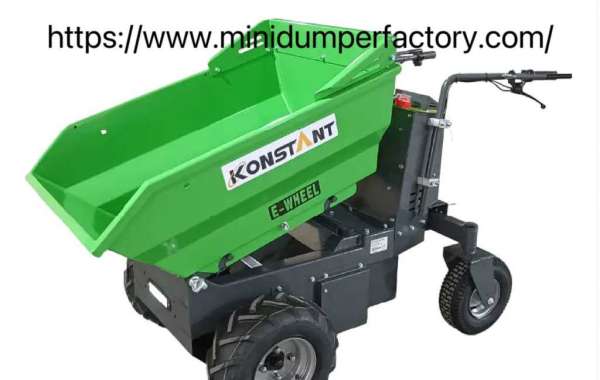
Mini Dumper selection starts with understanding the work that needs to be completed, rather than choosing a machine based on appearance or a single specification. Buyers should consider the materials being transported, the distance between loading and unloading points, site access, ground conditions, and expected daily workload. These details help manufacturers assess the application and discuss a configuration that suits the intended operation.
Identify the Materials You Need to Move
The type of material affects both the load requirement and the usable capacity of the hopper. Soil, gravel, stones, sand, wood chips, and garden waste have different densities, so the same volume can represent very different weights.
Buyers should estimate the weight of a typical load and identify the heaviest material expected during normal work. The rated payload should be checked against these requirements, and operators should never exceed the manufacturer’s stated limit.
It is also useful to consider whether materials are loose, irregular, wet, or likely to stick to the container. These characteristics can influence loading, discharge, cleaning, and routine inspection.
Measure the Entire Working Route
Compact equipment is often selected for projects with limited access, but a small overall footprint does not automatically guarantee that a machine can reach every working area. Measure the narrowest gate, doorway, passage, and turning point along the planned route.
Consider overhead clearance where the machine may pass beneath structures, as well as available room near loading and unloading locations. If the route includes ramps, uneven ground, or confined corners, share these details with the supplier before selecting a configuration.
A simple site sketch with measurements can make technical discussions more productive. It also helps buyers identify access restrictions before delivery, reducing the risk of discovering that the equipment cannot reach the intended work area.
Match the Drive System to the Surface
Ground conditions influence traction, maneuverability, ground disturbance, and routine running costs. Wheeled configurations may suit firm, relatively even surfaces, while tracked designs can be worth considering for some soft or uneven environments.
The decision should reflect the actual site rather than a general assumption about one drive system. Grass, loose gravel, wet soil, paved yards, and construction debris create different operating conditions.
Buyers should also ask about the manufacturer’s operating limits for slopes and uneven terrain. Maximum travel capability should not be treated as permission to turn, load, or unload on every incline. Follow the model-specific instructions and assess the working area before use.
Choose an Unloading Method That Fits the Job
The discharge arrangement affects how materials are delivered to their destination. Direct front tipping may suit an open unloading area, while a raised discharge configuration may be needed when filling a higher container. Other designs may offer additional directional flexibility.
Before purchasing, identify the exact unloading point and its height. Check whether the receiving container, truck bed, trench, or storage area provides enough clearance for the discharge process.
Buyers should confirm the relevant tipping height, operating procedure, and load restrictions with the manufacturer. A configuration that suits one site may not meet another project's requirements, even when both handle similar materials.
Consider Daily Workload and Operating Costs
The expected number of trips can influence equipment selection as much as the size of an individual load. A project involving occasional garden work may have different requirements from a construction site that moves materials throughout the working day.
Estimate daily operating hours, average travel distance, loading time, and unloading frequency. These figures can help buyers assess whether the proposed equipment matches the work cycle.
Purchase price is only one part of the overall budget. Fuel or charging needs, routine servicing, replacement parts, transportation, and potential downtime should also be considered. Asking about common service items and parts availability before ordering can help with long-term planning.
Review Maintenance Access and Documentation
Routine inspection should be practical for the people responsible for operating and maintaining the equipment. Ask which components require regular checks and whether service points can be reached without complicated procedures.
Depending on the model, inspection may involve the running gear, controls, hydraulic hoses, fasteners, engine components, or electrical connections. The manufacturer's maintenance schedule should guide servicing, and any unusual noise, leakage, or operating problem should be addressed before continued use.
Technical documents are equally important. Request the specification sheet, operating manual, maintenance instructions, and applicable compliance documents for the destination market. Confirming these materials in advance helps purchasing teams prepare for delivery, operator training, and ongoing service.
Prepare a Clear Inquiry for the Manufacturer
A detailed inquiry helps the supplier understand the project before recommending an available configuration. Include the intended application, material type, estimated load weight, required hopper volume, site measurements, surface conditions, discharge height, operating hours, and destination country.
If the machine must pass through a narrow entrance or unload into a specific container, provide measurements or photographs where possible. Also clarify any requirements for shipping dimensions, spare parts, packaging, or documentation.For buyers comparing equipment for construction, landscaping, or agricultural work, minidumperfactory provides a starting point for reviewing product information and discussing application requirements. Visit https://www.minidumperfactory.com/product/ to review available options and prepare an inquiry based on your site conditions, material handling needs, and planned workload.