
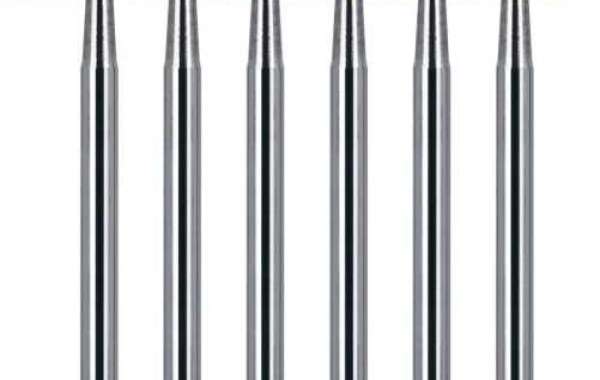
Long Shank Burs are designed for machining tasks where standard-length tools may not provide sufficient access to the working area. They can be considered for deep cavities, recessed sections, narrow openings, and components with complex internal structures. For industrial buyers, selecting a suitable product requires careful attention to reach, dimensions, cutting requirements, equipment compatibility, and manufacturing arrangements. Reviewing these details before ordering helps purchasing teams communicate their requirements clearly and avoid unnecessary specification changes.
Measure the Working Area Before Selecting a Length
The required reach should be determined by the actual workpiece rather than by choosing the longest available option. Buyers should measure the distance between the tool entry point and the target area. They should also consider cavity depth, opening diameter, and surrounding structures that may restrict movement.
A product that is longer than necessary may create additional handling challenges. A shorter configuration may not reach the intended surface. The objective is to identify a suitable working length that provides access while allowing the operator to maintain control.
When requesting a quotation, buyers can share technical drawings, photographs, or measurements of the target section. This gives the manufacturer a clearer understanding of the application and helps narrow down suitable specifications.
Evaluate Tool Stability and Operating Conditions
Extended dimensions should be considered together with the working conditions. A longer design may provide access to recessed areas, but the selected configuration also needs to match the equipment and operating method.
Buyers should explain how the product will be held, what type of machine will be used, and whether the operation involves continuous or occasional processing. They should also consult the applicable operating instructions for speed limits and usage requirements.
Avoid assuming that an extended design can be operated in exactly the same way as a standard version. Appropriate machine clamping, operating parameters, and handling procedures should be confirmed before use. These details are important when evaluating a product for a specific production environment.
Examine the Head Shape and Cutting Area
The cutting head determines how the product interacts with the workpiece. Different profiles can be used for internal contours, narrow grooves, curved surfaces, edges, and other machining areas.
Buyers should identify the shape of the target surface before choosing a head design. For example, a small opening may require a compact head, while a curved internal section may call for a different profile. The available cutting length should also be considered because it determines how much of the head can engage with the workpiece.
It is helpful to prepare a list of the required shapes when purchasing several product types. This allows the manufacturer to review the requested configurations and organize the quotation according to the actual application.
Verify Diameter and Connection Requirements
Overall length is only one part of the dimensional specification. The connection diameter must correspond to the collet or tool holder used by the buyer. Metric and inch measurements should be checked carefully rather than treated as interchangeable.
Other details worth confirming include total length, head diameter, cutting length, and the connection between the cutting head and the supporting section. For projects involving multiple machines, buyers should list the equipment specifications separately.
A dimension sheet can help prevent errors during ordering. It should include measurement units and clearly identify each required dimension. If the order is based on an existing sample, provide the sample measurements or technical drawing for reference.
Ask About Material and Manufacturing Details
The intended workpiece material affects the cutting configuration that buyers may need. Steel, stainless steel, cast iron, aluminum, and other materials can involve different machining requirements.
Purchasing teams should tell the manufacturer which materials will be processed and describe the expected working conditions. They can also ask about the cutting head material, supporting material, joining method, and available production configurations.
For customized orders, it is useful to confirm which specifications can be adjusted and which need to follow existing production options. Clear communication at this stage helps both parties assess whether the requested design can be arranged.
Request Samples and Review Inspection Arrangements
Before moving to a large purchase, buyers may request samples for application testing. A sample can help verify whether the dimensions, head profile, and equipment connection match the intended setup.
During testing, record installation conditions, accessibility, handling, and the resulting workpiece surface. Any unusual vibration, bending, or other operating concern should be reviewed before regular production use. Follow the manufacturer's operating instructions and applicable safety guidance during evaluation.
Buyers should also ask how dimensions and product appearance are inspected. For repeat orders, keeping approved samples and inspection records can provide a reference for checking later batches.
Confirm Order Details With the Manufacturer
A complete purchasing request should include product drawings, required dimensions, cutting profiles, quantities, packaging preferences, and delivery expectations. If the project involves customized specifications, buyers should identify each requested change in writing.
It is also useful to discuss sample arrangements, order scheduling, labeling, and shipping requirements before production confirmation. Distributors may need additional information for product identification and inventory management, while industrial users may focus on matching replacement tools to existing equipment.At carbidebursfactory, buyers can discuss application requirements, dimensional details, and product configurations before preparing an order. Visit https://www.carbidebursfactory.com/ to review the product range and contact the manufacturer with your drawings, target working dimensions, and purchasing requirements.






