
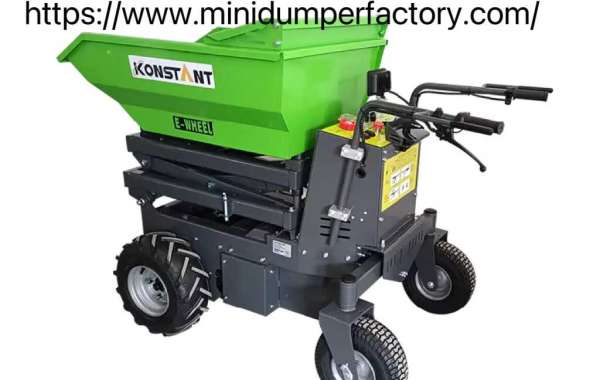
Mini Dumper Manufacturer selection involves more than finding a machine with a suitable load capacity or purchase price. For importers, equipment dealers, rental businesses, and construction suppliers, the decision can influence product positioning, customer satisfaction, maintenance arrangements, and future purchasing plans. Before placing an order, buyers should consider how the equipment fits their local market and whether the supplier can support the commercial requirements that come with selling and maintaining machinery.
Start With Your Target Customer Groups
Different customers use compact transport equipment for different purposes. Construction contractors may need machines for moving soil, sand, gravel, and building materials. Landscaping companies may focus on narrow access routes, garden maintenance, and moving materials across outdoor spaces. Agricultural businesses may require equipment for farms, greenhouses, and routine property work.
Before contacting a supplier, identify the customer groups you intend to serve. Consider their typical working environments, transport distances, expected loads, and purchasing budgets.
This information can help you select models that match actual demand rather than adding equipment to your catalogue without a clear sales purpose.
Build a Product Range Around Real Applications
A distributor may need several configurations to serve different projects. Buyers should compare available models according to rated load, machine dimensions, power source, drive arrangement, unloading method, and operating weight.
For example, battery-powered designs may suit certain indoor or noise-sensitive applications, while gasoline-powered versions may be considered for outdoor transport tasks. Tracked configurations and wheeled designs can also serve different ground conditions.
Ask for complete specification sheets and compare the details side by side. Pay attention to the actual model configuration instead of assuming that products with similar names have identical features.
A carefully planned product range can help distributors communicate product differences more clearly and respond to inquiries from different customer groups.
Consider Local Market Requirements
Importing machinery requires attention to the regulations and operating conditions of the destination market. Buyers should check applicable requirements for engine emissions, electrical components, machine safety, product labels, and user documentation.
The exact requirements may differ between countries and regions. Importers should confirm relevant rules with local authorities or qualified compliance professionals before arranging shipment.
It is also useful to consider climate, terrain, access conditions, and local maintenance resources. A machine intended for a warm outdoor environment may face different operating conditions from equipment used in enclosed buildings or cooler regions.
Providing the supplier with your destination market and intended application can make technical discussions more focused.
Review Maintenance Access and Spare Parts
Maintenance arrangements influence the ownership experience after delivery. Buyers should ask which components require routine inspection and how replacement parts can be identified and ordered.
Important items may include filters, belts, tracks, tires, hydraulic hoses, electrical components, and other model-specific parts. Request a spare parts list with part numbers or identification references where available.
For dealers and rental businesses, it may be useful to prepare a basic inventory of commonly required replacement items. This can help reduce delays when customers need routine maintenance or repairs.
Ask whether operating manuals, maintenance instructions, and parts diagrams are available. These materials can also support local service teams and help distributors respond to customer questions.
Check Warranty and Technical Support Arrangements
Before confirming an order, buyers should understand the supplier's warranty terms and the process for handling technical issues. Ask which components are covered, how a claim should be submitted, and what supporting information may be required.
It is also worth discussing technical assistance after delivery. For example, can the supplier help identify a component from photographs or a parts reference? Can operating instructions be provided when a customer has questions about a machine function?
Clear communication procedures can make cooperation easier for businesses that sell equipment across different regions. Buyers should record agreed warranty conditions and support responsibilities in the purchasing documents.
Discuss Branding and Product Presentation
Product presentation can influence how distributors introduce equipment to their customers. Some businesses may require customized colors, logos, nameplates, manuals, or accessories to match their existing product range.
Before requesting customization, prepare logo files, color references, packaging requirements, and any relevant technical drawings. Ask which changes are available and whether they affect minimum order quantities, production schedules, or sample approval.
minidumperfactory provides product options and customization information for businesses sourcing compact material transport equipment. Buyers can discuss their target applications, preferred configurations, branding requirements, and documentation needs before moving forward with an order.
Compare the Full Purchasing Arrangement
A quotation should be evaluated according to everything included in the proposed order. Compare the machine configuration, accessories, spare parts, packaging, documentation, warranty terms, payment conditions, and delivery arrangements.
Two offers with similar prices may cover different product specifications or supply services. A written comparison helps purchasing teams identify these differences before making a decision.
For repeat orders, ask how approved specifications are retained and how changes are communicated. Keeping model references, drawings, and order details organized can simplify future purchasing discussions.
Prepare for Long-Term Cooperation
A supplier relationship may involve more than one shipment. Dealers and importers should consider whether the available product range can support future customer demand and whether communication remains clear as order requirements change.
Discuss expected purchasing quantities, possible model additions, spare parts planning, technical updates, and delivery coordination. These subjects help both parties understand the commercial expectations before cooperation develops further.For businesses evaluating compact equipment for construction, landscaping, agriculture, and material handling, minidumperfactory offers product information to support model comparisons and sourcing discussions. Buyers can review available options at https://www.minidumperfactory.com/product/ and contact the company to discuss specifications, customization, and purchasing requirements.






