
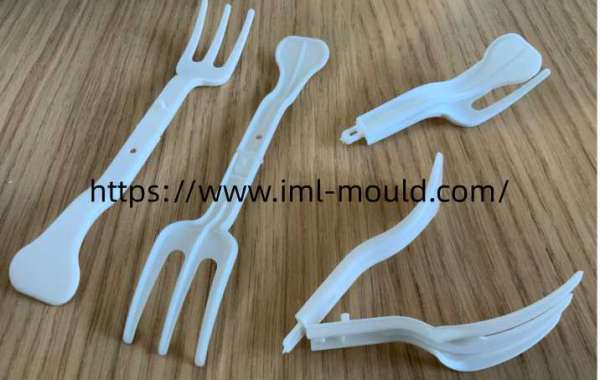
Plastic Fork Mould purchasing requires more than selecting a supplier and agreeing on a price. Buyers should examine how the proposed tooling will reproduce the required product shape, maintain consistent dimensions, and operate under actual factory conditions. Details such as tine spacing, handle thickness, resin flow, cavity arrangement, and ejection methods can influence production results. Discussing these requirements before ordering helps manufacturers and buyers establish a practical technical plan.
Define the Product Geometry Before Requesting a Quote
Start by preparing accurate product drawings or physical samples. The engineering team needs to understand the overall length, handle width, thickness, tine number, tine spacing, tip shape, and connection between the handle and head.
These details affect both product function and manufacturing feasibility. For example, narrow tine sections require suitable filling conditions, while a long, thin handle needs appropriate support during cooling and release. If the product has decorative textures, a customized outline, or a particular surface finish, include these requirements in the initial design package.
Buyers should also explain the intended market and application. Disposable food-service products may have different requirements for stiffness, weight, appearance, and packaging. If the design needs to match an existing spoon or knife range, provide the related samples so the supplier can review dimensions and product consistency.
Discuss Resin Selection and Product Performance
The resin should be confirmed before the tooling structure is finalized. PP, PS, and PLA are possible material options for different disposable cutlery applications, but their processing characteristics are not identical.
Buyers should identify the exact resin grade whenever possible. Material flow, shrinkage, stiffness, cooling behavior, and processing temperature can influence the design and trial conditions. If the project may involve several resin grades or colors, discuss the expected changes with the manufacturer before production planning.
Product performance should also be defined in measurable terms. For example, buyers can specify the expected handle stiffness, acceptable deformation, product weight range, and visual requirements. These standards give the engineering team a clearer basis for evaluating the design and help both parties assess samples consistently.
Examine Tine Shape, Gate Position, and Flow Balance
The tine area deserves particular attention because its narrow geometry can make filling more demanding. Poor filling conditions may result in incomplete tips, uneven tine dimensions, or visible defects. Buyers should ask how the proposed gate and runner arrangement will deliver resin to the different sections of the product.
For multi-cavity tooling, balanced filling is an important design consideration. Each cavity should produce parts with comparable weight and dimensions under the agreed processing conditions. The supplier should explain how the runner layout, venting positions, and filling sequence will be evaluated during testing.
Gate marks and parting-line positions should also be discussed. Their locations may influence appearance, edge quality, and downstream packaging. Buyers can identify visible surfaces and functional areas on the product drawing to help the engineering team plan these details.
Match Cavity Quantity With Factory Capacity
Cavity quantity should reflect the buyer's production plan rather than being selected only to increase the theoretical output. A larger cavity configuration may require greater injection capacity, suitable clamping force, balanced material distribution, and effective temperature control.
Provide the manufacturer with the injection machine model or its technical specifications. Important information includes platen dimensions, tie-bar spacing, clamping force, injection capacity, and available installation space. These details help determine whether the proposed tooling can operate on the intended equipment.
Buyers should also estimate annual demand, working hours, expected cycle time, and planned product variations. With this information, the supplier can discuss a practical cavity arrangement and explain the related investment and production requirements.
Review Cooling, Ejection, and Maintenance Access
Cooling design influences cycle time and dimensional consistency. Uneven temperature distribution may cause bending, shrinkage differences, or changes in product shape. Ask the supplier how cooling channels will be arranged and which areas require particular attention.
The ejection system should release finished parts without creating unnecessary marks or deformation. This is relevant for long handles and narrow tine sections, which may be affected by unsuitable ejector positions or insufficient draft.
Maintenance access is another detail worth reviewing before approval. Buyers should ask whether the runner area, vents, cooling connections, and replaceable components can be inspected and serviced conveniently. Requesting a maintenance plan and spare-parts list before shipment can also help the receiving factory prepare for routine operation.
Set Clear Trial and Acceptance Standards
A sample trial should follow agreed technical conditions. Before testing, confirm the resin grade, injection machine, operating parameters, sample quantity, and inspection method.
Samples should be inspected for overall dimensions, handle straightness, tine definition, tip filling, surface finish, flash, product weight, and release performance. For multi-cavity projects, identify the source cavity of each sample instead of mixing all parts together. This makes differences easier to trace.
Buyers should request trial records that include machine settings, cycle observations, inspection results, and any adjustments made during testing. If a sample does not meet the agreed requirements, record the issue and confirm the corrective action before final acceptance.
Confirm the Commercial and Delivery Arrangements
The purchase agreement should describe the tooling scope, steel specifications, cavity quantity, runner system, project schedule, trial stages, and delivery conditions. It should also explain which drawings, inspection documents, and spare components will be provided.
Clarify how design revisions will be handled and who is responsible for approving changes. If a modification affects machining time, cost, or production performance, both parties should review its impact before proceeding.
Technical support after delivery should also be discussed. Buyers can ask about installation guidance, maintenance instructions, replacement components, and communication channels for future production questions.
Prepare Your Project Information Before Ordering
A clear purchasing plan connects product geometry, material selection, tooling design, machine capacity, sample inspection, and delivery arrangements. Buyers who prepare drawings, resin details, output estimates, and acceptance standards can make technical discussions more productive. kingschains welcomes inquiries about customized cutlery tooling and manufacturing requirements. Visit https://www.iml-mould.com/ to review the available product information and discuss your drawings or samples with the team.






