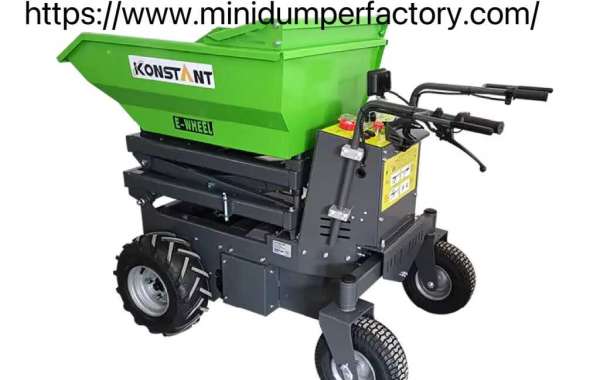
Mini Dumper Manufacturer selection should begin with the actual work that the equipment needs to perform. For construction contractors, landscaping businesses, agricultural operators, and machinery distributors, product suitability depends on more than appearance or a quoted carrying capacity. Buyers should consider material characteristics, site dimensions, ground conditions, unloading requirements, and daily operating arrangements. At minidumperfactory, we recognize that understanding these practical details helps international customers compare configurations and communicate their purchasing needs more clearly.
Match Carrying Capacity With Actual Materials
Carrying capacity is an important specification, but buyers should consider the materials being transported before selecting a model. Soil, gravel, sand, bricks, and green waste have different densities and loading characteristics.
A machine transporting loose soil may require a different hopper volume from one carrying heavier building materials. Buyers should therefore compare rated payload and hopper dimensions together rather than relying on one figure.
It is also useful to estimate the expected load per trip and the number of trips required during a working day. This information helps determine whether the selected configuration fits the intended workload.
Consider the Available Working Space
Construction and landscaping projects often involve restricted access areas. Narrow passages, small entrances, temporary pathways, and limited turning space can affect equipment selection.
Before requesting a quotation, buyers should measure the width of access routes and identify areas where the machine needs to turn or unload materials.
Overall machine width, length, height, and turning radius are useful specifications to review. For projects involving low entrances or compact work areas, overall height and operator access should also be considered.
Providing site measurements allows the production team to discuss suitable dimensions instead of relying on general descriptions of the working environment.
Compare Track and Wheel Configurations
Different drive arrangements serve different ground conditions and transportation needs.
Tracked models may be considered for soft soil, muddy areas, and uneven surfaces. Wheeled configurations may suit firm ground and sites where movement between working areas is required.
Buyers should compare ground contact, turning behavior, maintenance requirements, and the type of surface where the equipment will operate.
For landscaping projects, surface protection may also matter. In these situations, purchasers should explain whether the machine will travel over grass, paved paths, loose soil, or mixed terrain.
The choice should reflect the actual site rather than relying on assumptions about one drive arrangement.
Examine Hopper Design and Unloading Methods
The hopper affects how materials are loaded, carried, and discharged. Buyers should check its internal dimensions, opening arrangement, construction, and unloading direction.
Some applications require straightforward front unloading, while others may benefit from a configuration that allows materials to be discharged in a particular direction.
The unloading mechanism should also be considered in relation to the available working space. Buyers can ask about lifting movement, control operation, and the clearance needed during discharge.
If materials are transported into trenches, containers, or restricted areas, explaining the unloading position can help the production team discuss a suitable arrangement.
Review Engine and Power Options
Power configuration can influence operating arrangements, maintenance planning, and application suitability.
Buyers should compare available engine types, rated output, fuel requirements, starting methods, and routine servicing needs. The expected daily working hours and local service conditions are also relevant.
For overseas distributors, engine specifications should be reviewed alongside the requirements of the destination market. Availability of replacement filters, belts, and other service components may also influence purchasing decisions.
Providing the intended operating environment helps the supplier explain which power options are available for the selected model.
Check Operator Controls and Safety Arrangements
Ease of operation is important for businesses where different workers may use the same machine.
Buyers should examine the control layout, steering arrangement, visibility, access steps, and operator position. The machine should allow operators to understand the main functions and follow the supplied operating instructions.
Relevant safety details may include braking arrangements, emergency controls where applicable, protective structures, warning labels, and instructions for working on slopes.
Purchasers should request information about the safety features included in the selected configuration and confirm whether additional equipment is available for their application.
Estimate Routine Operating and Maintenance Costs
The purchase price is only one part of equipment ownership. Businesses should also consider fuel consumption, routine servicing, replacement components, transportation, and operator requirements.
A useful purchasing comparison includes maintenance intervals, recommended lubricants, track or tire replacement, hydraulic servicing, and access to technical documentation.
Buyers can request a parts list and maintenance schedule before ordering. This information helps distributors prepare service arrangements and allows contractors to plan routine equipment care.
For businesses operating several machines, consistent component identification and maintenance records can also simplify inventory management.
Confirm the Complete Specification Before Ordering
Before confirming an order, buyers should prepare a written specification covering carrying capacity, hopper dimensions, overall size, drive arrangement, power configuration, unloading method, accessories, and destination requirements.
Any requested changes should be documented and approved before production. This may include body color, logo placement, selected components, packaging, and additional accessories.At minidumperfactory, we work with international buyers to discuss equipment configurations for construction, landscaping, agriculture, and material transportation. Businesses can visit https://www.minidumperfactory.com/product/ to review available models, compare product specifications, and contact our team with their application details and purchasing requirements.