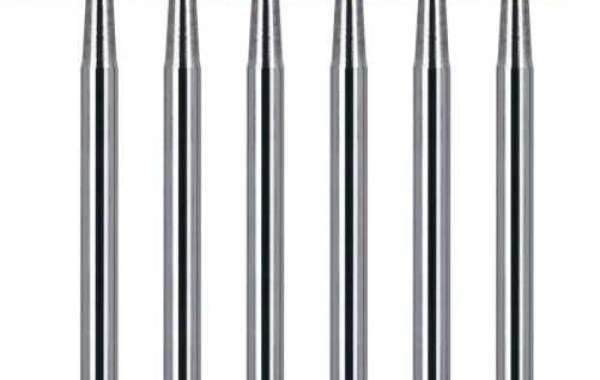
Long Shank Burs are designed for machining applications where standard-length cutting tools may not reach the required working area. They are commonly used in mold maintenance, metal fabrication, internal surface processing, deep cavity machining, and other industrial operations involving difficult-to-access sections. For distributors, wholesalers, and manufacturers, selecting suitable products requires attention to working length, cutting head geometry, material compatibility, dimensional accuracy, and equipment requirements. Reviewing these factors before purchasing helps businesses communicate their needs and select appropriate configurations.
Determine the Required Working Depth
Working depth is one of the first factors buyers should evaluate. Some metal components contain deep cavities, narrow channels, and internal corners that are difficult to process with conventional tools.
Before contacting a manufacturer, buyers should measure the distance between the equipment connection point and the intended processing area. The opening width and available movement space should also be considered.
Useful information includes:
Required working depth
Workpiece opening dimensions
Internal surface geometry
Processing position
Available equipment space
These measurements help manufacturers evaluate the required overall length and recommend suitable product configurations. They can also reduce the possibility of ordering a tool that cannot reach the intended area.
Choose a Suitable Cutting Head Profile
Head geometry determines how a cutting tool interacts with the workpiece. Different profiles are designed for different machining positions and surface conditions.
Common options include cylindrical, spherical, oval, flame-shaped, conical, and tree-shaped designs.
Cylindrical profiles can be used for flat surfaces and edge treatment. Spherical configurations are useful for rounded contours, while flame-shaped designs may help operators access narrow sections. Tree-shaped profiles can be considered for curved transitions and internal corners.
Buyers should compare head diameter, cutting length, and profile geometry according to their actual applications.
Providing technical drawings or reference photographs can help the manufacturer understand the workpiece structure and discuss appropriate product dimensions.
Check Overall Dimensions and Equipment Compatibility
Dimensional accuracy is important when purchasing extended-reach products. Buyers should verify the overall length, cutting head diameter, working length, connection diameter, and applicable tolerances.
The connection diameter must match the collet or holder used by the grinding equipment. Metric and imperial measurements should be checked carefully to avoid compatibility problems.
Another factor is the unsupported length during operation. Longer tools may be more sensitive to vibration and bending, particularly when excessive pressure is applied. Buyers should follow the manufacturer's recommended operating conditions and select suitable equipment for the intended task.
For customized projects, providing a detailed drawing before production can help both parties confirm the required measurements.
Compare Cutting Patterns for Different Materials
Workpiece materials influence the selection of cutting configurations. Steel, stainless steel, cast iron, aluminum, and copper have different machining characteristics and may require different tooth arrangements.
Single-cut designs generally feature continuous flutes and can be considered for certain material removal tasks. Double-cut configurations use intersecting grooves that help break removed material into smaller chips.
When comparing available designs, buyers should consider:
Workpiece material and hardness
Required material removal
Surface finishing expectations
Chip evacuation conditions
Operating speed and equipment
The appropriate configuration depends on the actual processing requirements. Buyers can request product samples to evaluate cutting behavior under their intended working conditions before purchasing larger quantities.
Examine Raw Materials and Manufacturing Procedures
Manufacturing details can provide useful information when evaluating a potential supplier. Buyers should ask about raw material specifications, production methods, dimensional inspection, and finished product checks.
For tools featuring an extended metal structure, straightness and connection quality deserve particular attention. These details are relevant to the product's overall construction and operating stability.
A factory evaluation may include:
Raw material verification
Cutting head processing
Tooth formation and grinding
Component alignment
Dimensional measurement
Finished product inspection
Clear explanations of these procedures help purchasing teams understand how the manufacturer manages production and evaluates completed orders.
Ask About Customized Product Options
Different industrial customers may require different product configurations. Mold manufacturers may need particular working lengths, while metal fabrication businesses may request specific head shapes and cutting diameters.
Before placing an order, buyers should ask about available dimensions, customized designs, sample arrangements, and minimum order quantities.
At carbidebursfactory, customers can communicate their drawings, application details, and estimated purchasing quantities when discussing manufacturing requirements. This information helps the factory review technical specifications and discuss suitable production arrangements.
For customized projects, confirming product dimensions and sample requirements before mass production can help reduce misunderstandings between the buyer and manufacturer.
Evaluate Bulk Purchasing and Supplier Communication
For wholesalers and distributors, purchasing decisions also involve production schedules, packaging arrangements, product labeling, and delivery coordination.
A clear purchasing document should include product dimensions, cutting head profiles, material requirements, estimated quantities, and packaging preferences.
Buyers may also ask the manufacturer:
Are standard and customized dimensions available?
Can samples be arranged before bulk production?
What inspection procedures are performed?
Can different specifications be included in one order?
What are the estimated production and delivery schedules?
These questions help buyers understand the factory's working arrangements and prepare more organized procurement plans.When sourcing extended-reach cutting tools for mold processing, metal fabrication, and deep cavity applications, evaluating technical specifications and manufacturing arrangements is an important part of purchasing. carbidebursfactory provides product information and manufacturing support for different industrial requirements. Buyers interested in available models, customized dimensions, and wholesale services can visit https://www.carbidebursfactory.com/ to review the product range and contact the factory directly.