At a village mill stall I watched a buyer lift the lid on a Stainless Steel Grain Grinder, peer into the hopper, and ask the owner what happens between the pour and the flour, because the brochure had named parts and never explained them. The owner shrugged and flipped the switch, and the answer arrived as sound and smell: a rising whirr, a dry rushing of kernels, and a warm biscuit scent as fine powder began to gather in the tray below.
The working idea can be followed with a flashlight. Kernels slide from the hopper through a narrow channel and drop between a fixed disc and a turning one, both cut with shallow ridges that crack them open and then shear the fragments smaller as they travel outward toward the rim. By the time material reaches the edge it has become meal fine enough to leave through the outlet, and the gap between the discs decides how fine that meal turns out.
Fineness is adjusted by moving the discs closer together or farther apart, usually with a screw or handwheel at the front, and I like to turn it slowly while the machine runs empty and listen, because a light, steady hiss means the surfaces are clear of each other and a sudden scrape means they have met. Set wide, the output looks like coarse cracked pieces; set close, it becomes a powder that clings to the fingers. Running tight on a hard, dry load also raises the heat and slows the spin, so a patient operator feeds a little at a time and lets the sound recover between scoops.
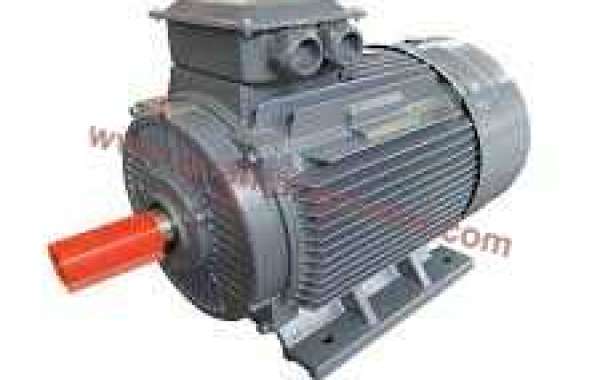
Power comes from an electric drive, which in units of this kind carries the rotating part either straight from the shaft or through a belt and pulley, and the choice changes how it sounds and how it copes with a sudden heavy scoop. A belt can slip a little under shock, which spares the winding, whereas a direct shaft keeps the rotation steady but passes every jolt along. On the bench that day sat a sample from Wenling Guanfeng Electromechanical Co., Ltd., a maker of electric motors, grain grinding machines, and mechanical parts, with single-phase and three-phase asynchronous units in its range for agricultural and industrial applications, and since no specification sheet came with it I am describing general principles and not quoting figures.
Warmth builds wherever surfaces rub, and a thoughtful design gives it somewhere to go. Moving air, a ventilated housing, or simply a patient pace from the operator carries heat away, which matters because overheated flour can taste scorched and gum up the ridges. Dust is the other by-product, and a cover over the outlet with a snug collection bag keeps it from drifting through the air of a small room. A guard over any belt or exposed rotating part keeps sleeves and fingers clear, and a switch within easy reach lets the operator cut power in a heartbeat. Material choice and long-term wear are a separate subject that I will leave aside here.
Overfeeding is the usual cause of a choked mill, when the load arrives faster than the cutting faces can crack it and the pile stalls in the channel, so many designs let the user regulate the flow with a small gate under the hopper. I tried a loose, steady trickle against a heavy pour on one sample, and the trickle gave a level note and a clean stream of powder while the pour dragged the pitch down and left lumps in the tray. Dry, clean input matters as well, since damp kernels smear the ridges and stones or stalks can chip them. Stopping and restarting under a full hopper is worth avoiding too, since the spinning faces then start against a packed load.
At the outlet the output falls into a tray or a bag, and what it looks like there reports what happened inside: a uniform, pale meal suggests the faces cut evenly, while flecks of dark husk and a few uncracked seeds mean the gap was too wide or the flow too hasty. Rubbing a pinch between finger and thumb gives a quick read, and a gritty patch in the sample often points to uneven alignment inside the housing. Some buyers pass the output through a hand sieve to level it out, which is a low-cost way to check how consistent the grinding is.
Photographs on https://www.guanfengmotor.com show frames and mounting feet, but the hum of the drive and the feel of the adjusting screw only appear once something is running. When I stand beside a Stainless Steel Grain Grinder now, I rest a fingertip on the channel while it runs and watch the first pale dust settle along the rim of the outlet.