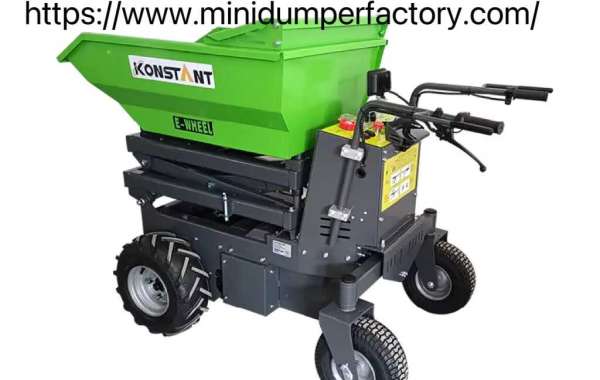
Mini Dumper Manufacturer selection requires careful communication between buyers and the production team. For international importers, construction equipment distributors, rental companies, and wholesalers, placing an order involves more than selecting a model from a catalog. Buyers need to understand available configurations, confirm technical requirements, review sample arrangements, and coordinate delivery details. Asking the right questions at the beginning can help both parties establish clear expectations and prepare an order that matches the intended market.
What Product Configurations Can Buyers Select?
Before requesting a quotation, buyers should understand the available product configurations. Different customers may have different requirements for machine size, loading capacity, drive structure, and unloading functions.
Some projects involve moving soil and gravel around construction areas, while others require transporting plants, stones, or agricultural materials. These applications may require different dimensions and operating arrangements.
Buyers can request a product catalog containing model numbers, photographs, basic specifications, and configuration details. It is also helpful to ask which features are included as standard and which can be selected as optional items.
For distributors, understanding the available range makes it easier to organize product categories and prepare quotations for different customer groups.
Which Specifications Should Be Confirmed?
Technical information should be reviewed before selecting a model. Buyers should request detailed specifications rather than relying only on general descriptions or product photographs.
Important details include:
Rated payload and hopper capacity.
Overall length, width, and height.
Engine or motor configuration.
Transmission and drive arrangement.
Hydraulic tipping functions.
Travel speed and operating controls.
Machine weight and recommended applications.
These details help buyers compare different configurations according to their actual working requirements.
If a particular specification is important to the project, it should be clearly recorded in the inquiry and purchasing documents. This helps avoid confusion when several models have similar appearances but different technical arrangements.
Can the Machine Work in the Intended Environment?
The working environment should be explained before the product is selected. Buyers can provide information about ground conditions, access routes, transportation distances, slopes, and available operating space.
For example, narrow passages require attention to machine width and turning clearance. Uneven outdoor surfaces may influence the choice of wheels or tracks. Sites with restricted unloading areas may require specific tipping arrangements.
It is also useful to describe the materials being transported. Soil, sand, stones, construction waste, and agricultural supplies have different weights and loading characteristics.
Providing photographs or videos of the working area can make communication more practical. The production team can then discuss relevant configurations based on the conditions described by the buyer.
What Should Buyers Know About Sample Orders?
Sample arrangements can help buyers evaluate a product before committing to a larger purchase. A sample allows the purchasing team to review the machine structure, operating controls, appearance, and included accessories.
Before requesting a sample, confirm the model number, configuration, payment terms, delivery arrangements, and estimated preparation time.
Buyers should also prepare a checklist for evaluation. This may include:
Whether the actual dimensions match the specification sheet.
Whether the controls are arranged as expected.
Whether the unloading function operates correctly.
Whether the supplied accessories match the order.
Whether the packaging is suitable for transportation.
If the sample meets the agreed requirements, its configuration can serve as a reference for subsequent orders.
Which Customization Details Need Early Confirmation?
Customization can help distributors prepare products for their own sales channels. Depending on the available options, buyers may request specific colors, company logos, labels, nameplates, manuals, or packaging designs.
To communicate these requirements clearly, prepare logo files, color references, drawings, and written instructions. Buyers should ask whether the requested changes are available and whether they affect order quantities, pricing, or production schedules.
Packaging details also deserve attention. Confirm carton markings, product labels, protective materials, and shipping dimensions before approving the final arrangement.
For customized orders, written confirmation is important. Both parties should review the approved artwork and product specifications before production begins.
How Should Buyers Review Production and Inspection Arrangements?
Buyers should ask how production progress is organized and what inspection procedures are available. Relevant details may include component checks, assembly procedures, functional testing, and final product inspection.
Depending on the selected configuration, inspection can cover the frame, welding areas, fasteners, hydraulic functions, electrical connections, braking system, and unloading operation.
For bulk orders, a written inspection checklist can help keep requirements consistent across different units. Buyers may also request production photographs or inspection records where available.
It is useful to discuss how any identified issues will be communicated and handled before shipment. This creates a clearer process for both the purchasing team and production staff.
How Can Importers Prepare for Delivery?
Delivery planning should be part of the initial purchasing discussion rather than an afterthought. Buyers need to confirm the estimated production schedule, packaging method, shipping dimensions, loading arrangements, and required export documents.
For international shipments, transportation costs may depend on the machine dimensions, packaging configuration, and shipping method. Requesting these details early can help importers prepare a more accurate purchasing budget.
Buyers should also confirm the documents supplied with the shipment, including commercial invoices, packing lists, operating manuals, and other agreed paperwork.
A clear delivery plan helps distributors coordinate warehouse space, customs procedures, and onward transportation after the goods arrive.
How Can Buyers Prepare for Repeat Purchases?
Businesses planning long-term cooperation should consider how product specifications and order records will be maintained. Keeping model numbers, approved configurations, packaging details, and customization files organized can simplify future purchasing discussions.
Buyers can also share estimated demand and preferred product combinations with the production team. This information may help with inventory planning and discussions about repeat orders.For companies sourcing compact material transportation equipment, minidumperfactory provides a product range that buyers can review according to their application and purchasing requirements. Prepare your preferred specifications, expected quantity, and customization details before making an inquiry. Visit https://www.minidumperfactory.com/product/ to review available models and discuss product configurations, sample arrangements, and order requirements.