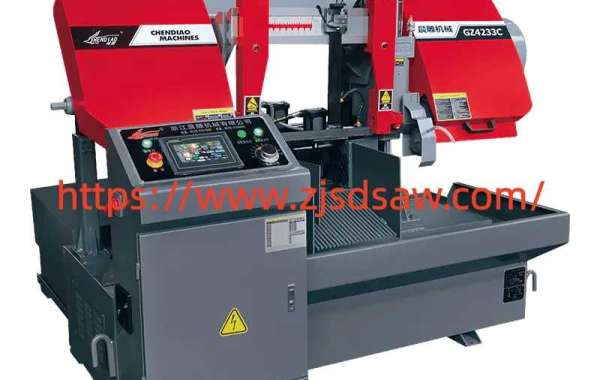
Horizontal Metal Cutting Band Saw Machine applications are closely connected to the way manufacturers organize material preparation and workshop operations. In metal fabrication, raw stock often arrives in different forms, including long bars, structural sections, solid materials, and industrial profiles. Moving and positioning these materials requires planning, especially when workpieces need to pass through several manufacturing stages before becoming finished components.
One practical challenge is material handling. Long metal stock can take up considerable workshop space, and its movement needs to be coordinated with storage, preparation, and processing areas. Poorly organized material flow may create unnecessary movement for employees and complicate daily production arrangements. When selecting industrial equipment, businesses should consider how the machine fits into the complete material handling process.
A horizontal working arrangement offers a different approach to equipment layout. The material is supported along a working surface while the cutting assembly operates according to the intended design. This configuration can be relevant for workshops processing bars, profiles, and other stock that benefits from organized horizontal support. Buyers should evaluate the working arrangement in relation to their usual workpiece shapes and handling methods.
Workpiece support is particularly important when dealing with longer materials. Supporting the stock appropriately helps maintain its intended position during processing. Depending on the application, additional material supports or handling equipment may be needed around the machine. Purchasing teams should consider these arrangements before installation so that the complete working area can be planned properly.
Another important factor is the relationship between machine structure and the surrounding environment. A suitable supporting frame provides the foundation for the working assembly, while the worktable and clamping components help organize material positioning. Buyers should examine how these parts are arranged and whether operators can access the areas required for loading, adjustment, and routine inspection.
Material characteristics also influence equipment selection. Different metals may have different surface conditions, hardness levels, and structural forms. Solid bars and hollow profiles, for example, do not necessarily require identical handling arrangements. Manufacturers should identify their regular material categories and discuss these applications with equipment suppliers before choosing a configuration.
The cutting process itself involves several connected elements. The blade, guiding assembly, workholding structure, and drive system all contribute to the intended working operation. Each component has a specific role within the overall design. Buyers should understand how the equipment coordinates these elements and whether its configuration corresponds with the materials and production activities in their facilities.
Operator experience is another consideration that should not be overlooked. Employees need sufficient space to prepare workpieces, operate controls, and collect processed materials. A practical layout can make routine tasks easier to organize and help reduce unnecessary movement around the working area. Control accessibility, visibility, and the arrangement of frequently inspected components are also worth reviewing during equipment evaluation.
Maintenance planning should be considered before purchasing as well. Industrial equipment requires regular attention to mechanical components, guiding elements, electrical connections, and other working parts. An arrangement that allows convenient inspection can make routine maintenance easier to organize. Buyers should also ask suppliers about recommended servicing procedures, technical documentation, and replacement component arrangements.
Factory layout can influence the entire purchasing decision. A workshop needs to accommodate incoming materials, equipment installation, employee movement, and the collection of finished workpieces. The machine should fit into this sequence without creating unnecessary obstacles. Before ordering, businesses can prepare a layout plan and review the installation requirements with the supplier.
There is also a practical difference between purchasing equipment for occasional work and introducing it into a continuous manufacturing process. Some workshops process different materials according to changing orders, while others work with recurring components. Understanding the production schedule helps buyers identify which operating arrangements and supporting facilities are appropriate for their needs.
Chendiao provides industrial sawing equipment for manufacturing and metalworking applications. Its product range covers different equipment configurations, including manual, semi-automatic, automatic, and CNC-related solutions. These options give businesses an opportunity to evaluate equipment according to material characteristics, workshop arrangements, and production requirements. When discussing a project, customers can provide details about their workpieces and existing manufacturing processes to help clarify their equipment needs.
Selecting suitable machinery involves considering more than the cutting operation itself. Material storage, workpiece support, operator accessibility, maintenance planning, and factory layout all influence how equipment fits into daily production. A well-considered purchasing process begins with understanding these practical requirements. Businesses reviewing industrial sawing solutions can visit Chendiao at https://www.zjsdsaw.com/ to view its equipment range and consider suitable options for their manufacturing environments.