
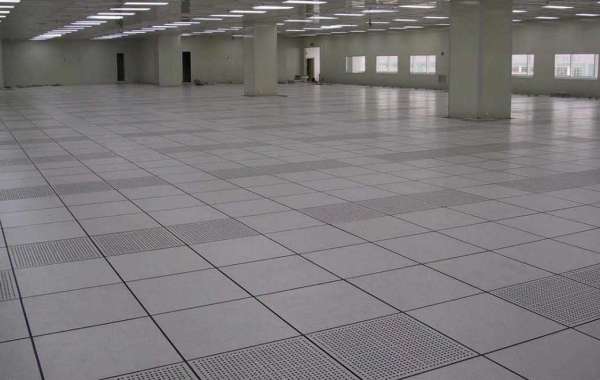
Raised access flooring is made consisting of modular floor panels that are suspended from a number of supports above the real floor. This creates an empty area between the raised floor panels, known as a plenum, which can be utilized to route building services like plumbing, electrical, and HVAC below the suspended ceiling rather than above it.
The floor panels are modular in design and can include either the floor material (such as wood or tiles) or specialized modules such as air diffusers, electrical or telecommunications terminals, and so on. Because the floor can simply be changed to add electricity, HVAC, and computing connections as needed, there is a high degree of layout flexibility.
For a variety of reasons, routing services through the plenum is desirable.
It enables considerably easier and faster access to a building's infrastructure, allowing for repairs and maintenance without the need for scaffolding or ladders.
It also allows for more efficient wiring, ducting, and pipe routing, lowering the cost of these components. Furthermore, underfloor air distribution reduces running expenses while simultaneously increasing air quality.
Types of Raised Access Floors
Raised access floors were once a tough sell for architects when developing office spaces, even though they became a common choice for industrial and commercial buildings. The conventional floor height resulted in a reduction in room volume, thus it wasn't an optimal choice.
Floors with Full-Height Access
Full-height access floors have floor heights ranging from six to 24 inches, and hence give the most plenum volume. Because the interior volumes and floor levels must be coordinated to completely integrate with the overall building design, they are an excellent choice for new construction.
The greater plenum space is required to accommodate all of the UFAD HVAC system's piping, wiring, and pressurized airflow delivery components, as well as the services infrastructure required to operate a big, heavily populated building or the cooling needs of a data center. For greater accessibility and serviceability of underfloor components, taller floor heights are frequently chosen.
Raised Floor with a Low Profile
Low-Profile raised floor systems are appropriate for retrofits and/or when a building's floor-to-ceiling height limits prevent a full-height installation from being feasible.
Although the standard width of the floor panels further decreases the available plenum volume, the support pedestals typically range in height from two and a half to five inches. Despite these challenges, a low-profile raised access floor system can be a great way to manage wires and equipment while allowing for creative flexibility.