
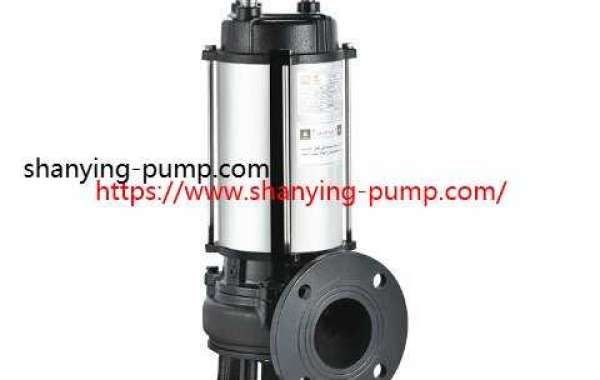
Wastewater collection systems rarely operate under identical conditions. Residential drainage may contain household residues and organic matter, while commercial facilities and industrial sites can generate liquids with suspended particles, fibers, and varying chemical characteristics. Selecting suitable pumping equipment therefore requires attention to more than basic water transportation. A Submersible Sewage Pump is designed to operate directly within collected wastewater, making it useful for drainage installations where equipment must handle changing liquid conditions while fitting into underground pits, tanks, and other restricted spaces.
The materials used in pump construction have a considerable influence on their suitability for different environments. Cast iron is widely used in pump housings because its structural strength supports demanding working conditions. It provides a solid enclosure for internal mechanical components and is commonly considered for municipal drainage, construction projects, and general wastewater transportation. Stainless steel offers different advantages, particularly when corrosion resistance and surface condition are important. Its application can be relevant to wastewater containing substances that may affect conventional metal surfaces.
Material selection should extend beyond the external housing. Impellers, shafts, mechanical seals, and other internal components also require suitable material combinations. These parts experience different mechanical and environmental stresses during operation. The impeller comes into direct contact with the transported liquid, while sealing components help protect the motor compartment. Selecting materials according to the characteristics of the wastewater can help reduce premature wear and support more consistent equipment operation.
Buyers should begin the purchasing process by examining the actual conditions of their drainage systems. The presence of fibrous debris, sediment, organic waste, or other suspended substances can influence the appropriate pump structure. For example, applications involving ordinary wastewater may have different requirements from systems transporting liquids containing materials that tend to accumulate around moving components. Understanding these differences helps buyers avoid selecting equipment based solely on general product descriptions.
Installation arrangements deserve equal attention. The location of the collection tank, the direction of the discharge pipeline, the available electrical connections, and the accessibility of the equipment can all influence purchasing decisions. Some projects require permanently installed pumps, while others benefit from portable equipment that can be moved between drainage locations. Buyers should also consider the experience of the supplier, the availability of replacement components, and the quality of technical assistance provided throughout the purchasing process.
A manufacturer's ability to understand different operating environments can make product selection more straightforward. Taizhou Shanying Pump Co., Ltd. develops and supplies several types of water pumping equipment, including submersible sewage pumps and stainless steel sewage pump solutions. Its product range gives customers different options when evaluating equipment for construction drainage, environmental protection, and other water management applications.
The functional design of sewage pumping equipment depends on the coordination of several mechanical and electrical components. The motor generates the driving force, while the impeller transfers energy to the liquid and directs it through the pump casing. The inlet structure guides wastewater into the hydraulic chamber, and the discharge passage carries the liquid toward the connected pipeline. Each component must work within the overall design to support stable transportation.
Different impeller structures serve different wastewater conditions. Some designs prioritize an open flow passage to accommodate suspended materials, while others incorporate cutting or crushing mechanisms for wastewater containing easily entangled debris. These approaches address different operating challenges, so buyers should understand the nature of the transported liquid before choosing a particular design. An unsuitable configuration may increase the likelihood of blockage or create additional maintenance requirements.
Protection and control features also contribute to the practical operation of sewage pumps. Electrical protection helps reduce risks associated with abnormal operating conditions, while appropriate sealing arrangements help prevent wastewater from entering sensitive motor areas. Automatic control options can support operation according to changing liquid levels, reducing the need for constant manual intervention in certain installations. The suitability of these features depends on the project environment and system configuration.
The user experience of pumping equipment is closely connected to installation and maintenance convenience. In underground drainage chambers, equipment accessibility can be limited, making straightforward installation arrangements particularly valuable. Clearly positioned connections, manageable component structures, and understandable installation instructions help technicians complete their work more efficiently. Equipment that can be inspected without unnecessary dismantling also makes routine maintenance easier to organize.
Long-term maintenance involves paying attention to the condition of mechanical seals, electrical cables, impellers, and external connections. The accumulation of unsuitable debris may affect hydraulic passages, while abrasive substances can gradually influence component surfaces. Regular inspection and appropriate cleaning practices help operators recognize developing problems. Manufacturer support and access to compatible replacement components are also useful considerations when planning the long-term management of a drainage system.
Product appearance is closely related to structural practicality. A well-organized pump housing should protect internal components while supporting convenient installation and handling. The position of the inlet and outlet needs to correspond with the intended piping arrangement, and the external structure should accommodate the requirements of the working environment. Surface finishing, component assembly, and protective construction also influence how buyers evaluate manufacturing quality.
Taizhou Shanying Pump Co., Ltd. integrates product development, manufacturing, sales, and service, supported by professional technical personnel and pump testing facilities. Its product portfolio includes general submersible pumps, deep well pumps, stainless steel screw pumps, and sewage pumping equipment. The company also applies quality management practices throughout its manufacturing activities. For distributors, engineering contractors, and businesses exploring wastewater transportation solutions, further product information and company details are available at https://www.shanying-pump.com/.






